

Industry news
-

Africa Water Infrastructure Pipeline and Flagship Projects
Africa is entering a sustained cycle of water infrastructure investment — driven by urbanisation, climate stress, food security, and the push to industrialise. Tiegu supports African buyers by mapping each flagship programme to the right ductile iron pipe specification — pressure class, lining, coating, and joint — before the order is placed, so the pipe matches the duty rather than a generic class. This article walks through the project types that actually move DIP volume across the continent,Read more -
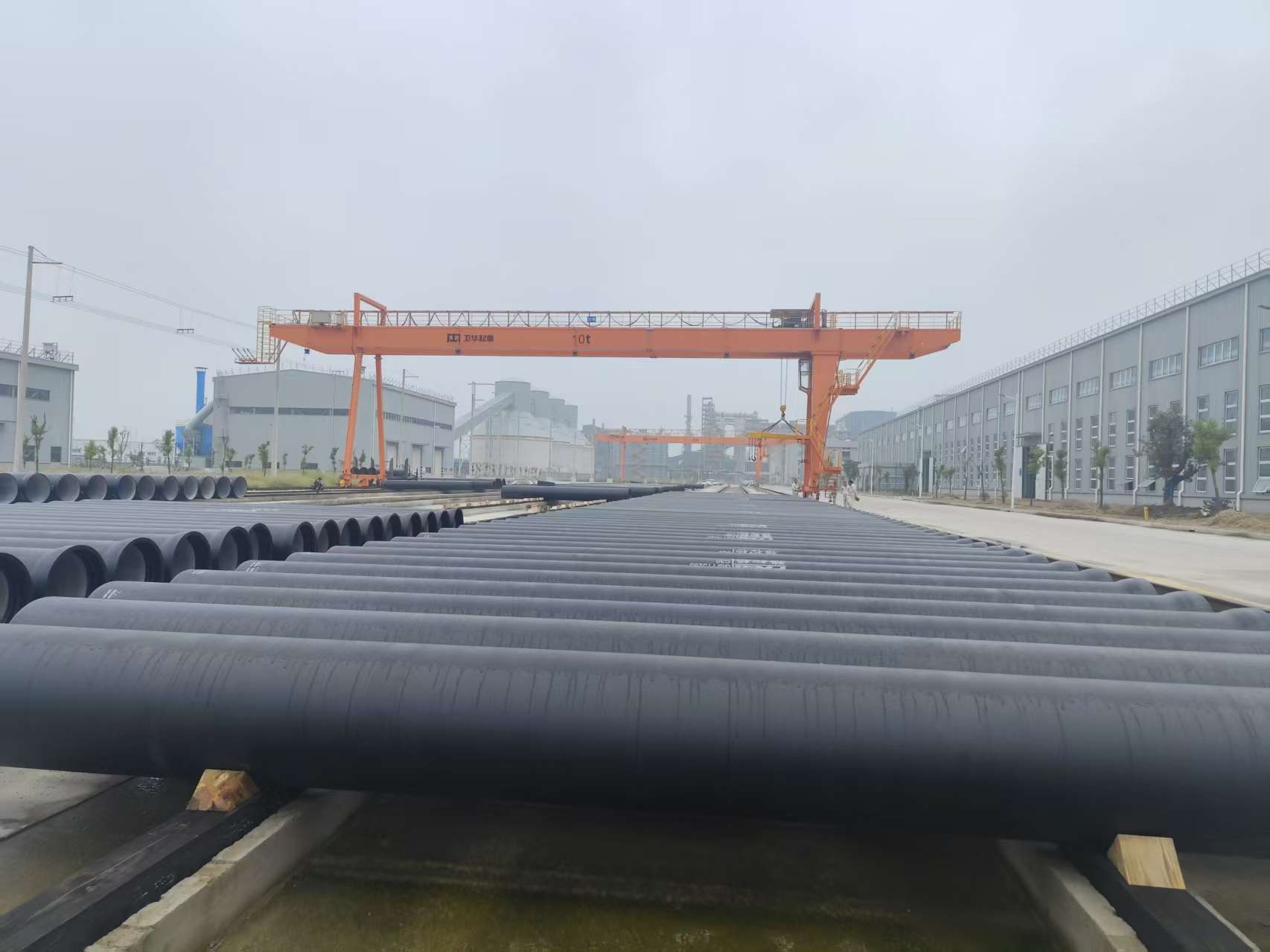
Ductile Iron Pipe vs GRP and HDPE in African Water Projects
African water programmes often reopen the same question before the specification is fixed: should the main be ductile iron pipe (DIP), glass-reinforced plastic (GRP), or high-density polyethylene (HDPE)? Each material is a legitimate engineering choice, but they behave very differently under pressure, in aggressive soil, across uneven terrain, and over a 50-year service life. Tiegu supports African buyers by framing the DIP-vs-GRP-vs-HDPE choice around the actual duty — pressure profile, soil anRead more -
Ductile Iron Pipe for Rural Water Supply and Bulk Water Transfer in Africa
Rural water supply in Africa rarely runs on a single, flat pressure profile. Water is lifted from a borehole or river intake, pushed through a pump station, carried across kilometres of uneven ground in a bulk transfer main, then branched into low-pressure village networks. Tiegu supports these schemes by confirming the pipe specification segment by segment — intake, pump station, bulk main, and village branch — so the diameter, pressure class, joint, and lining match each duty before the orderRead more -
Ductile Iron Pipe vs GRP and HDPE in African Water Projects
Ductile Iron Pipe vs GRP and HDPE in African Water ProjectsAfrican water programmes often reopen the same question before the specification is fixed: should the main be ductile iron pipe (DIP), glass-reinforced plastic (GRP), or high-density polyethylene (HDPE)? Each material is a legitimate engineering choice, but they behave very differently under pressure, in aggressive soil, across uneven terrain, and over a 50-year service life. Tiegu supports African buyers by framing the DIP-vs-GRP-vRead more -
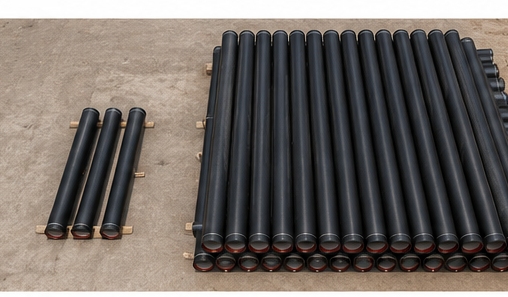
Ductile Iron Pipe for Municipal Water Distribution Networks: Sizing, Pressure Classes, and Joints
Municipal water distribution is where ductile iron pipe (DIP) earns its place in most city networks. From the treatment outlet to the street main and the service connection, distribution carries steady pressure, tolerates surge from pumps and valves, and stays repairable for decades underground. Why distribution networks favour DIPDistribution favours DIP because it balances three things buyers care about: pressure capacity, joint reliability, and long-term maintainability. Unlike plain steRead more -
Ductile Iron Pipe Corrosion Protection in African Soil and Climate: Laterite, Salinity, and Heat
Africa's soils and climate put unusual stress on buried and exposed pipe, and the coating that works in one district can fail in the next. A utility in the East African Rift, a coastal estate in Lagos, and an inland scheme near the Sahel each face a different dominant threat. Specifying ductile iron pipe (DIP) correctly means matching the external protection and internal lining to the exact burial zone and water chemistry, not applying one default specification across the whole country. OurRead more -

Ductile Iron Pipe for Saudi Vision 2030 and NEOM: Water Infrastructure Sourcing
Saudi Arabia's Vision 2030 has turned water infrastructure into one of the region's largest and steadiest pipe markets. Beyond Riyadh and Jeddah, the giga-projects — NEOM, the Red Sea Project, Qiddiya, and the Riyadh growth catchment — are building desalination, transmission, district, and reuse networks from the ground up. Ductile iron pipe (DIP) sits in the specification for much of this work because it carries high head, tolerates surge, and survives the Kingdom's saline soil andRead more -
Ductile Iron Pipe vs GRP and HDPE in Gulf Water Projects: Which Material Should You Specify?
his guide compares the three on the criteria that decide Gulf performance, then gives a decision framework to apply before the BOQ is issued.Read more -
Ductile Iron Pipe Market Access and Certification in the Gulf: SASO/SABER, ECAS, and Qatar Standards
Winning a Gulf water or wastewater contract is only half the task; the pipe still has to clear customs and satisfy each country's conformity regime before it reaches the trench. Market access in Saudi Arabia, the UAE, and Qatar runs through national certification schemes that sit on top of the ISO 2531 / EN 545 product standards. This guide explains how those schemes work for ductile iron pipe (DIP) and what a buyer should prepare so certification never stalls a shipment. Our standards and cRead more -
Ductile Iron Pipe for Desalination and Reverse Osmosis (RO) Plants
The Gulf holds a large share of the world's desalination capacity, and every cubic metre produced travels through kilometres of pipe. Ductile iron pipe (DIP) carries a real but selective role across these streams, and lining choice decides whether a plant lasts decades or seasons. This guide maps where DIP fits in a desalination or reverse-osmosis (RO) plant and how a buyer should specify it. Our DIP solutions page outlines the full diameter and class range behind these applications.The threRead more -
Ductile Iron Pipe Tender and Procurement in the Gulf: BOQ, Incoterms, and Third-Party Inspection
Government utilities and EPC contractors across Saudi Arabia, the UAE, and Qatar buy ductile iron pipe (DIP) through formal tenders rather than spot purchases. The volume is large, the specifications are strict, and the commercial terms decide who carries freight, insurance, and risk. This guide covers how a Gulf DIP tender is usually staged, what the bill of quantities (BOQ) must pin down, which Incoterms appear most often, and where third-party inspection fits. See our DIP solutions overview fRead more -
Ductile Iron Pipe Trenchless Installation (Pipe Jacking and Microtunneling)
Open-cut trenching is not always possible. Under roads, railways, rivers, and dense urban blocks, digging a trench means closing lanes, shoring deep excavations, and disrupting everything above. Trenchless installation lets you place ductile iron pipe (DIP) with minimal surface disturbance. This guide covers where trenchless fits for DIP, the methods that work, and the design points that decide success.When trenchless makes senseChoose trenchless when the surface above the line cannot be opRead more -
Ductile Iron Pipe Water Hammer and Surge Protection
Ductile Iron Pipe Water Hammer and Surge ProtectionRead more -
ISO 2531, EN 545 or AWWA C151: Which Standard Should You Specify?
ISO 2531, EN 545, and AWWA C151 are the three standards that govern most ductile iron pipe (DIP) supplied worldwide. So when your project calls for DIP, which one should you actually put in the specification? At Tiegu, we supply ductile iron pipes to all three standards and help international buyers match the right one to their project before they commit to a purchase order.The three standards at a glanceMost DIP used in water and wastewater projects falls under one of these three standardsRead more -
Ductile Iron Pipe Hydraulic Performance and Flow Capacity (Hazen-Williams C)
A pipe is not just a pressure vessel; it is a hydraulic conduit. The diameter, the internal smoothness, and the flow velocity decide how much water actually moves, how much pumping energy it costs, and whether the line stays stable under transients. For a buyer, hydraulic performance is where first cost meets lifetime operating cost — and it is one of the most misjudged line items in a pipe quote. This guide explains the Hazen-Williams C factor for ductile iron pipe (DIP), how flow capacity scalRead more -
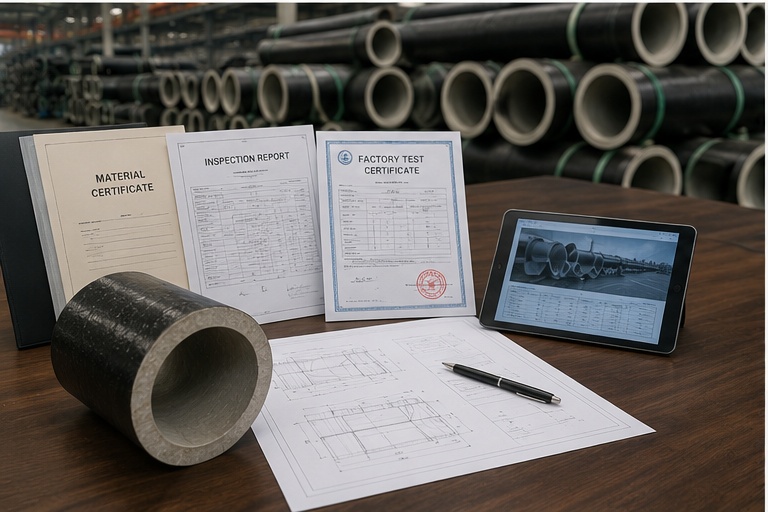
How to Read a Ductile Iron Pipe Mill Test Certificate (MTC): A Buyer's Guide
A Mill Test Certificate (MTC) — also called a Mill Test Report (MTR) — is the birth certificate of your ductile iron pipe. It records the chemical composition, mechanical strength, and test results of the exact batch you received. No MTC means no traceability, no compliance evidence, and no leverage if pipes fail in the field.Received an MTC from your China supplier and not sure what the numbers mean — or whether they are real? Most buyers glance at the stamp and file it away. That is a mistake.Read more -
How to Store and Handle Ductile Iron Pipe on Site: A Buyer's Guide
The pipe survived the foundry, the hydrostatic test, and six weeks at sea. The last place it gets damaged is often the one buyers forget about: the weeks it sits on the project site before installation. Dragging with an excavator bucket, chaining the pipe barrel, or leaving rubber gaskets baking in the sun are the quiet causes of coating damage, joint contamination, and rejected lengths discovered too late to claim. This guide covers what to do the moment the container opens.1. Receive and verifRead more -
Ductile Iron Pipe Tender Specification Writing Guide
A tender specification is the technical contract that tells bidders exactly what ductile iron pipe (DIP) you need — and, just as importantly, what you will not accept. It sets the floor for quality before a single bid is opened.Writing a water-project tender and worried the lowest bid will arrive as the lowest quality? You are not wrong to worry. A weak specification is the most common reason public and EPC projects end up disputing pipe deliveries. Tiegu supports international buyers and theirRead more -
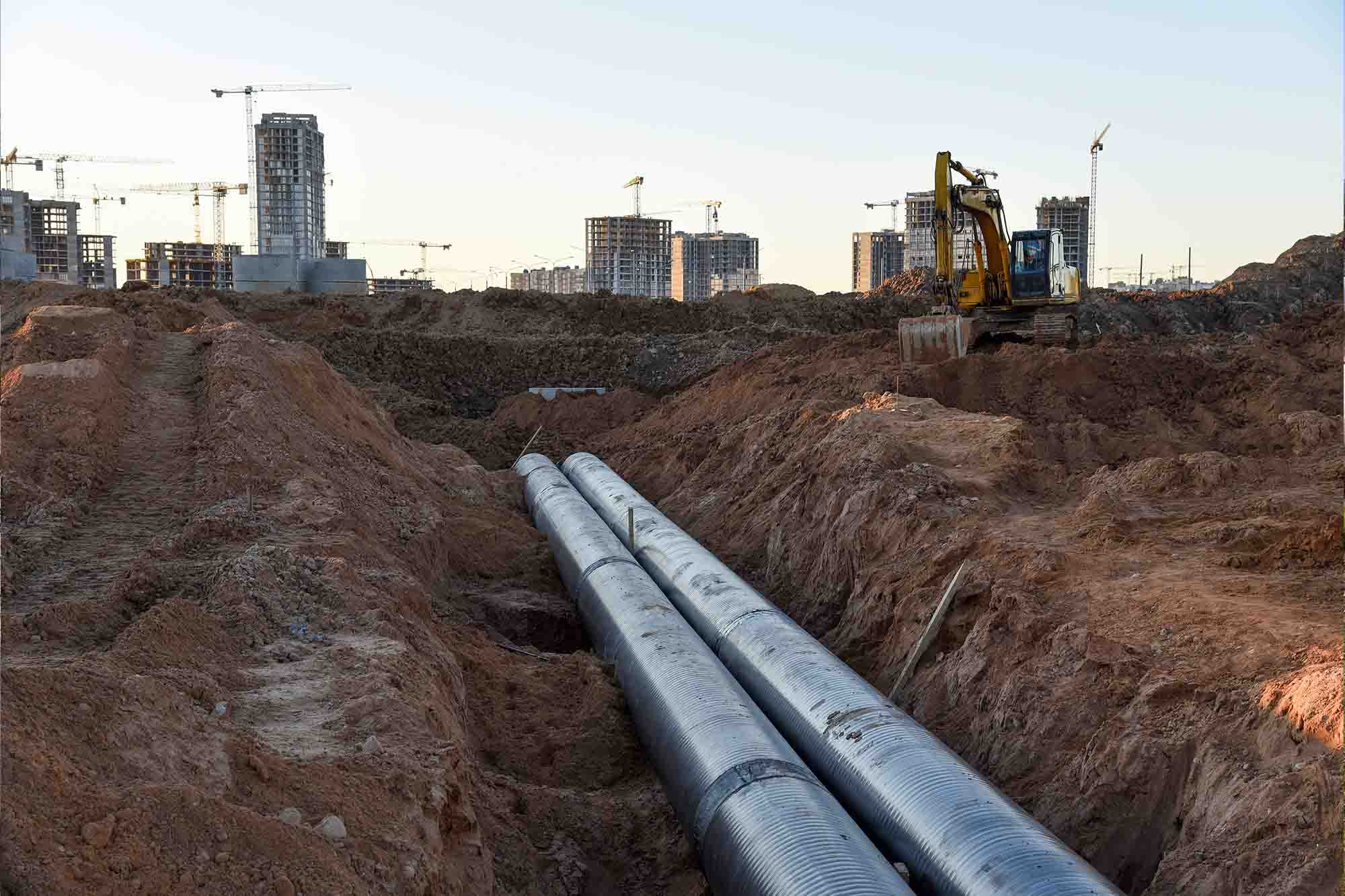
Ductile Iron Pipe Pre-Shipment Inspection Checklist: What Buyers Should Verify Before Loading
Pre-shipment inspection is the final quality gate before ductile iron pipes leave the factory for export. It happens after production but before loading into containers or bulk vessels.Ordered DIP from China and wondering what to check before the truck reaches the port? Most quality disputes start because buyers skip this step.Tiegu coordinates pre-shipment inspection as part of its one-stop sourcing service, so we see exactly where things go wrong.Why pre-shipment inspection mattersFindingRead more -
Flexible Joint Ductile Iron Pipe: How Much Deflection Can It Handle?
Flexible joint ductile iron pipe explained — typical deflection angles, how it differs from restrained joints, and when you actually need one.Read more