

Ductile Iron Pipe Trenchless Installation (Pipe Jacking and Microtunneling)

Open-cut trenching is not always possible. Under roads, railways, rivers, and dense urban blocks, digging a trench means closing lanes, shoring deep excavations, and disrupting everything above. Trenchless installation lets you place ductile iron pipe (DIP) with minimal surface disturbance. This guide covers where trenchless fits for DIP, the methods that work, and the design points that decide success.
When trenchless makes sense
Choose trenchless when the surface above the line cannot be opened, or when open-cut is more expensive once traffic, shoring, and reinstatement are counted.
Roads, rails, and runways. Crossings where a long closure is unacceptable.
Rivers and canals. Underwater crossings without damming or diversion.
Urban services. Under pavements, basements, and live utilities where excavation is risky.
Environmental buffers. Wetlands, protected land, and slope-stability zones.
Trenchless is not always cheaper on pipe alone, but it often wins on total project cost once surface works are included.
Methods that suit DIP
Pipe jacking
A jacking frame pushes pipe segments through a bore from a launch shaft, with excavation at the face. DIP is well suited because its high ring stiffness carries the axial jacking force without buckling, and each new segment is pushed onto the previous one. The pipe is the tunnel liner.
Microtunneling
A remotely controlled, guided microtunnel boring machine (MTBM) excavates ahead while pipes are jacked behind it. It gives tighter line-and-level accuracy than open jacking and suits deeper, longer drives under built-up areas.
Slip-lining (renovation)
An existing deteriorated pipe is reused as a conduit, and a new, smaller DIP is pulled or pushed through it. This rehabilitates the line without a full excavation.
What does not suit DIP
Directional drilling (HDD) is generally not used for DIP. DIP is rigid and cannot be curved along the drill path; it is installed straight or with only the limited deflection of its flexible joints. Where HDD is specified, the crossing is usually served by a different material. Be honest about this limit rather than forcing DIP into a method it does not fit.
Design points that decide success
Jacking force vs pipe and joints. The drive length, bore friction, and face pressure set the axial load. Use high ring-stiffness pipe and joints that carry the thrust — often restrained or self-anchoring joints — so the line does not pull apart under compression.
External coating for abrasion. Jacking drags the pipe through soil; a polyethylene (PE) or epoxy external coating resists the friction and protects the iron far better than bare zinc-bitumen during the drive.
Diameter and wall. Longer drives often use thicker walls or higher classes; confirm from the dimensions and pressure class guide.
Allowable deflection and curves. Flexible push-on joints permit limited angular deflection, so the alignment can follow a gentle curve. The flexible joint deflection guide shows how much bend each joint allows.
Shafts and spoil. Plan the launch and reception shafts, muck removal, and dewatering before the drive starts.
Trenchless vs open-cut
Trenchless costs more in plant and engineering but less in surface reinstatement. It is the better choice where closure, shoring depth, or environmental constraints dominate. Open-cut stays cheaper for long, unobstructed rural runs. Match the method to the constraint, not to habit.
Common mistakes buyers make
Assuming DIP can be directionally drilled. It cannot follow a curved bore; specify jacking or microtunneling instead.
Under-specifying the external coating. Bare coating wears during jacking; specify PE or epoxy for the drive.
Forgetting joint thrust rating. Standard push-on joints may not carry the jacking load; use restrained joints for the drive.
Ignoring shaft logistics. No launch or reception shaft plan means the pipe arrives but cannot be installed.
Treating trenchless as automatically cheaper. Compare total installed cost, not pipe price alone.
What to specify in your order
Tell the supplier the method (jacking or microtunneling), drive length, bore diameter, soil profile, and required joint type and external coating. A clear trenchless specification prevents the wrong pipe arriving at the shaft. Inquire about specifications and pricing →
Tiegu is a China-based ductile iron pipe sourcing and export partner serving international water infrastructure, wastewater, and industrial projects.
We supply DN80–DN2600 ductile iron pipes and fittings manufactured according to ISO 2531, EN 545, EN 598, and AWWA standards, with cement mortar lining, epoxy lining, and various external coating options.
From technical specification confirmation and supplier coordination to quality inspection, export documentation, and logistics support, Tiegu provides a reliable one-stop sourcing solution under a single commercial contract.
Inquire about specifications and pricing →
Frequently asked questions
Can ductile iron pipe be installed by directional drilling (HDD)?
Generally no. DIP is rigid and cannot follow the curved bore path that HDD requires; it is installed straight or with only the limited deflection of its flexible joints. For HDD crossings a different material is normally specified, while DIP is used for jacking and microtunneling.
Which joints are used for pipe jacking?
Restrained or self-anchoring joints are typical because they carry the axial jacking thrust and keep the line from separating under compression. Standard push-on joints are not usually rated for the drive load on their own and would need external restraint devices. For longer drives, state the required joint thrust rating in the specification so the supplier can confirm it matches the calculated jacking force.
What external coating should a jacked DIP have?
A polyethylene (PE) or epoxy external coating is preferred because it resists the abrasion of being dragged through soil during the drive, protecting the iron better than the standard zinc-plus-bitumen finish. PE film in particular forms a smooth, low-friction skin that lowers jacking force as well as wear. Confirm the coating is rated for jacking service, not only for buried corrosion protection.
How much can a DIP line bend in a microtunnel?
Only as much as its flexible joints allow — a small angular deflection per joint that accumulates into a gentle curve. The exact allowable bend depends on the joint type and is defined in the flexible joint deflection guidance. In design, add the per-joint deflection across the whole drive to confirm the total alignment stays within the joint limits.
Is trenchless always more expensive than open-cut?
Not on total installed cost. Trenchless spends more on plant and engineering but far less on surface closure, shoring, and reinstatement. Where those surface costs dominate, trenchless is often the cheaper overall choice.
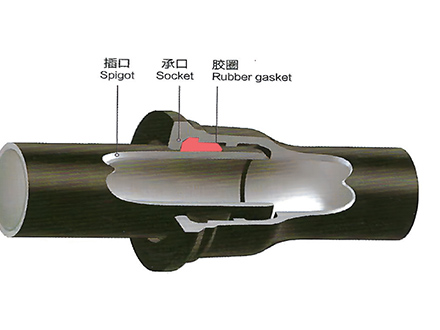 GT-type Joint Ductile Iron Pipe
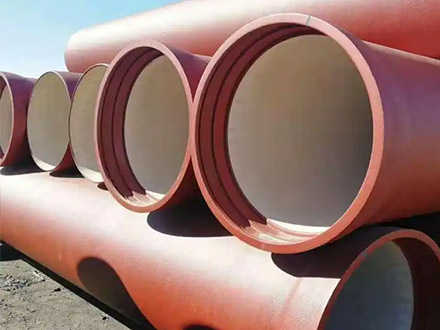
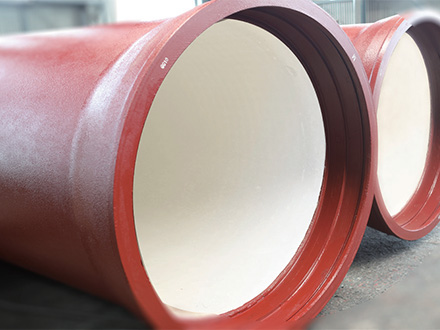 Sewage Pipe (Ductile Iron Sewage Pipe)
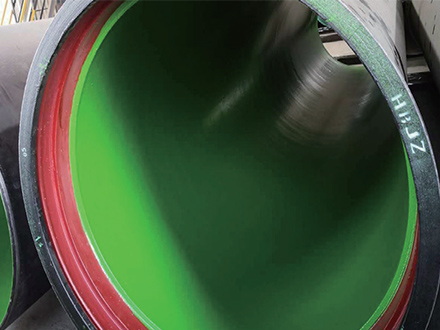 Special Coating Pipe (Ductile Iron Pipe with Special Coatings)