

Ductile Iron Pipe vs GRP and HDPE in Gulf Water Projects: Which Material Should You Specify?

Gulf water utilities specify three pipe families for the same networks — ductile iron pipe (DIP), glass-reinforced plastic (GRP, also called FRP), and high-density polyethylene (HDPE). Each has won regional projects and each fails when specified into the wrong service. This guide compares the three on the criteria that decide Gulf performance, then gives a decision framework to apply before the BOQ is issued. Our DIP solutions page covers the diameters and classes behind the DIP side of this comparison.
The three contenders at a glance
| Criterion | Ductile iron pipe (DIP) | GRP / FRP | HDPE |
|---|---|---|---|
| Material | Ferrous, ductile matrix | Composite, glass + resin | Thermoplastic |
| Wall | Thick, rigid | Thin, stiff | Flexible |
| Joints | Push-on T-type, flanged | Adhesive / locked | Butt-fused |
| Pressure | High, surge-tolerant | High, joint-dependent | Moderate, temp-limited |
| Corrosion | Needs coating / lining | Inert | Inert |
| Temperature | Stable to 50°C+ | Stable | De-rates above 20–40°C |
| UV | Unaffected | Unaffected | Degrades unprotected |
| Life-cycle | Very long | Long | Moderate |
The table is a starting point; the Gulf's soil, heat, and duty shift the balance on nearly every row.
Gulf conditions that sharpen the choice
Four local factors push Gulf material selection harder than temperate markets:
Saline, high-temperature soil — coastal sabkha and tidal soils stay wet, salty, and warm, attacking any unprotected ferrous surface (see our saline soil corrosion guide).
Ambient heat past 50°C — surface and shallow-buried pipe see sustained heat that weakens thermoplastics.
High head and surge — transmission mains and pumped desalination flows demand pressure margin and surge tolerance.
Dense, built-up corridors — city networks often need trenchless installation under roads and existing services.
Together these four end the "one material fits all" habit from cooler climates.
Corrosion and the soil
DIP is ferrous, so it relies on a zinc + bitumen or PE sleeve externally and a cement or epoxy lining internally. Specified correctly, it shrugs off saline soil for decades. GRP and HDPE are chemically inert and ignore soil salinity entirely, but GRP is brittle under point loads and HDPE's real weakness is heat and UV, not corrosion. The external coating comparison and coating and lining page show how DIP's protection is built up for buried and tidal zones.
Pressure, surge, and temperature
DIP carries high static head and absorbs water-hammer surge through wall mass and restrained joints, suiting long transmission mains. The dimensions and pressure class page and water-hammer guide explain how class and surge are set together. GRP also rates for high pressure but leans on joint integrity and resin grade. HDPE's continuous-service pressure drops as temperature rises, and at Gulf ambient heat its de-rated allowance is well below the cool-climate catalogue figure — a point often missed in supplier comparisons.
Hydraulics and pumping energy
All three are smooth-bore but the numbers differ. DIP's cement-lined bore runs a Hazen-Williams C around 130–150; our hydraulic performance note details the flow maths. HDPE is very smooth (C near 150) but its pressure wall is thick, so for a given OD the bore is smaller. GRP is smooth too, though liner quality varies by maker. Over a 30-year pumping life, small C differences compound into real energy cost, so hydraulics belong in the material decision.
Joints and leakage
DIP uses T-type push-on joints that flex with settlement and give the deflection plant yards need (the flexible joint deflection guide shows the angles); flanged joints handle equipment tie-ins. GRP joints are adhesive or locked and demand clean, controlled site conditions, where a poor bond is a hidden leak path. HDPE is butt-fused into a continuous string — excellent when fusion is done well, a weak point when it is not. The joints and connections page lays out where each joint type belongs.
Installation and trenchless
DIP's rigidity and joint tolerance suit open-cut and trenchless methods, including pipe jacking where the pipe takes the load. GRP can be jacked but its brittle wall needs careful load distribution; HDPE suits sliplining and insertion but is poor for direct jacking under high thrust. City corridors under roads often decide the material before hydraulics do.
UV and heat exposure
HDPE degrades under direct sun unless co-extruded with carbon black or buried, and its pressure rating de-rates as Gulf surface temperatures exceed its rated band. GRP and DIP are unaffected by UV, so this single factor removes HDPE from many above-ground and shallow-buried Gulf mains.
Life-cycle cost, not just capital
HDPE usually wins on first cost. GRP sits mid. DIP costs more upfront but offers a very long, low-maintenance life and easy repair. Over a 50-year design horizon the replacement and downtime cost of a cheaper, shorter-lived material can overtake DIP's upfront premium. The supplier document checklist keeps the certificate file proving what was delivered against the spec.
A practical decision framework
Large transmission mains, high head, surge, trenchless under roads → DIP (or GRP where soil is benign and joints shop-controlled).
Desalination intake and brine, aggressive chemistry → DIP with epoxy / PU lining, or GRP with a proven liner; decide by joint control and temperature.
Low-pressure, buried, non-potable service and sliplining → HDPE is a strong, low-cost fit.
Above-ground or shallow-buried in open sun → DIP or GRP; rule HDPE out unless UV-stabilised and temperature-de-rated.
Potable network, potable-approved lining required → DIP cement lining or GRP with potable certification; confirm approval early.
The tender is where this gets fixed: the tender specification guide shows how to write the material, lining, and standard so bids compare. The standards and certification page ties the product norm to the conformity evidence Gulf authorities expect.
Buyer's specification checklist
Before issuing the BOQ, decide: (1) the service and its chemistry, (2) the material family and why, (3) the lining and external protection, (4) the pressure class from worst-case surge, (5) the joint type and site-control level, (6) the product standard (ISO 2531 / EN 545 / AWWA C151 for DIP), and (7) the MTC and inspection the file needs. Writing the material decision into the spec with the reason stops a low bid from substituting the wrong pipe. Inquire about specifications and pricing →
Frequently asked questions
Is ductile iron pipe better than GRP for Gulf water?
Not universally — GRP is inert and light, and wins where soil is benign and joints are shop-controlled. DIP leads on surge tolerance, trenchless load, and repair simplicity, so the right choice follows the service, not the material reputation. For a given Gulf project, weigh soil aggressiveness and site joint control before settling the material.
Why is HDPE often excluded from Gulf transmission mains?
Gulf ambient heat (often 45–50°C) de-rates HDPE and cuts its pressure rating, while direct sun degrades it without carbon-black stabilisation. Temperature and UV remove it from many above-ground and shallow-buried mains. Where the run is deep-buried and low-pressure, HDPE stays competitive, but transmission duty rarely meets both conditions.
Which material suits desalination brine lines?
Brine is hot, hyper-saline, and chemically dosed, so DIP with a thick epoxy or PU lining or GRP with a proven liner are the realistic options; HDPE's temperature limit is the constraint. The lining certificate is a permit condition, not a formality. Match the liner to the exact brine chemistry and temperature before the BOQ is issued.
Does DIP really need external coating in saline soil?
Yes. DIP is ferrous and the Gulf's wet, salty, warm soil is exactly the environment that attacks unprotected iron. Zinc + bitumen or a PE sleeve, matched to the burial zone, is what delivers the decades-long life the design assumes.
How do I make material choices comparable across bids?
Write the material, lining, joint type, pressure class, and product standard into the tender specification with the service reason, so every bidder prices the same duty. The tender specification guide gives the structure, and the standards page confirms the conformity evidence. Ask each bidder to state the de-rated pressure at the Gulf operating temperature so the comparison stays honest.
Tiegu is a China-based ductile iron pipe sourcing and export partner serving international water infrastructure, wastewater, and industrial projects.
We supply DN80–DN2600 ductile iron pipes and fittings manufactured according to ISO 2531, EN 545, EN 598, and AWWA standards, with cement mortar lining, epoxy lining, and various external coating options.
From technical specification confirmation and supplier coordination to quality inspection, export documentation, and logistics support, Tiegu provides a reliable one-stop sourcing solution under a single commercial contract.
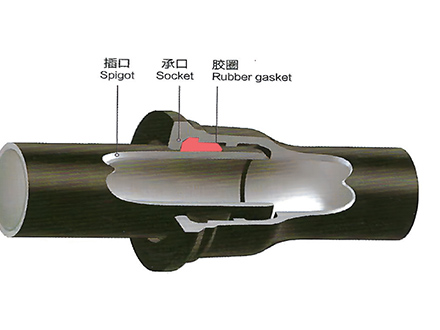 GT-type Joint Ductile Iron Pipe
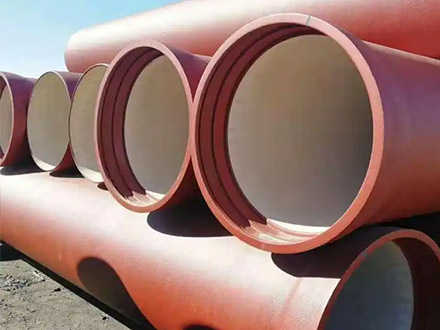
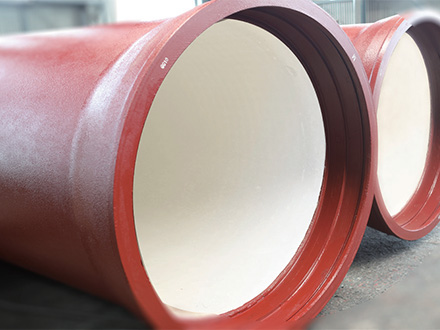 Sewage Pipe (Ductile Iron Sewage Pipe)
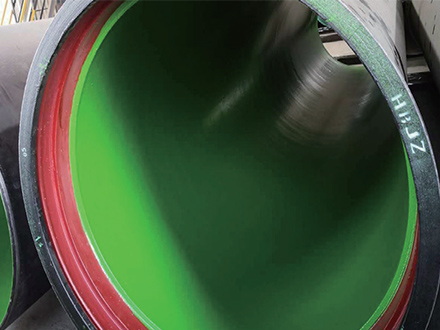 Special Coating Pipe (Ductile Iron Pipe with Special Coatings)