

Ductile Iron Pipe Hydraulic Performance and Flow Capacity (Hazen-Williams C)
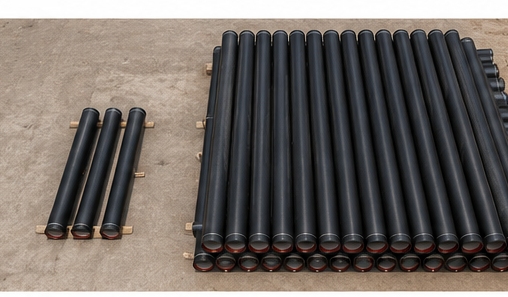
A pipe is not just a pressure vessel; it is a hydraulic conduit. The diameter, the internal smoothness, and the flow velocity decide how much water actually moves, how much pumping energy it costs, and whether the line stays stable under transients. For a buyer, hydraulic performance is where first cost meets lifetime operating cost — and it is one of the most misjudged line items in a pipe quote. This guide explains the Hazen-Williams C factor for ductile iron pipe (DIP), how flow capacity scales with diameter, the velocity limits you should respect, and what to put in a hydraulic specification.
What the Hazen-Williams C factor means
The Hazen-Williams C is a roughness coefficient used in the Hazen-Williams equation to estimate friction head loss in water pipes. A higher C means a smoother, more efficient bore and less friction loss for a given flow and diameter. C is empirical: it bundles surface roughness and aging effects into a single number that designers use to size pipes and predict pressure drop. For DIP, the value is set by the internal lining, not by the iron itself.
DIP's C value: around 150, and stable
A cement mortar lined (CML) ductile iron pipe typically carries a Hazen-Williams C of about 140–150, commonly taken as 150 in design. That is high — comparable to PVC and far above unlined or aged cast iron, where C can fall below 100. The crucial point is stability: the dense, smooth cement lining does not roughen or tuberculate the way an exposed ferrous surface does, so the head loss you calculate at year one is close to what you get at year thirty. The cement lining requirements under ISO 2531 vs AWWA C104 explain why the lining quality and thickness behind that smooth bore are standardized rather than left to chance.
How flow capacity scales with diameter
Flow capacity is not linear with diameter. Under Hazen-Williams, capacity rises roughly with the 2.6 power of diameter for a fixed head loss and C. In practice, moving from DN200 to DN300 can more than double deliverable flow at the same friction slope, and DN400 versus DN200 is a multiple rather than an increment. This is why undersizing to save pipe cost backfires: a smaller diameter forces higher velocity and head loss, pushing both pump energy and surge risk upward. Use our dimensions and pressure class guide to pair diameter with rated pressure.
Velocity limits and why they matter
Most water authorities cap DIP velocity around 2–3 m/s in normal operation, with a lower continuous target and defined allowance for transient spikes. Stay under it and you limit erosion at fittings, noise, and — most importantly — water hammer. A high-velocity line that is suddenly closed can see a pressure wave far above the pipe class. Hydraulics and pressure class are two sides of the same coin: the standards and certification page maps how AWWA and ISO treat operating and surge limits.
Head loss is a lifetime pumping cost
Head loss is paid for in energy. Every metre of friction loss is recovered by pump power, every hour of every year. A pipe with a higher, stable C needs a smaller pump or less power for the same flow, and it keeps that advantage for decades. When comparing DIP with alternatives, compare on equal C and equal lining condition at year 20, not on a brochure value at installation. That is where DIP's smooth, stable bore repays the premium. The ductile iron pipe solutions overview shows how diameter and lining options combine across a project.
Internal vs external: hydraulics lives on the inside
Hydraulic performance is set entirely by the bore. The external coating or wrapping — zinc, bitumen, PE, epoxy — protects the iron from soil but does nothing for flow. The coating and lining overview separates internal lining choices from external protection. For hydraulics, specify the lining that keeps the bore smooth and intact: cement mortar is the workhorse, with epoxy or polyurethane lining where water quality or abrasion demands more. In corrosive ground, the aggressive soil guide helps you protect the outside without touching the bore.
What to specify in a hydraulic quote
When you request a quote, give the designer's flow demand, the allowable head loss or friction slope, the operating pressure, and the lining specification. Ask suppliers to state the C value they used in their hydraulic calculation — and confirm it matches the lining you specified. If a vendor quotes head loss on an unrealistically high C, the real system will underperform. Inquire about hydraulic specifications and pricing →
Common mistakes specifiers make
Sizing diameter from peak flow only, ignoring future demand and the velocity ceiling.
Comparing pipes on brochure C values instead of equal lining condition at year 20.
Forgetting that head loss is a lifetime pumping cost, not a one-time number.
Letting velocity creep above 3 m/s and inviting water hammer on valve closure.
Treating the lining as cosmetic when it is what sets the C and the 50-year hydraulic performance.
FAQ
What Hazen-Williams C value should I use for DIP?
Use about 140–150, commonly 150, for cement mortar lined ductile iron. Confirm the lining specification, because C is a property of the bore rather than the iron. State the value explicitly in the hydraulic calculation so competing quotes are genuinely comparable.
Does DIP lose flow capacity as it ages?
Far less than unlined iron. The dense cement lining resists tuberculation and roughness growth, so C and capacity stay close to the as-installed value for decades. That long-term stability is a key reason DIP is specified for mains expected to serve 50 years or more.
How much more flow does a larger diameter give?
A lot — capacity scales roughly with diameter to the power of 2.6 under fixed head loss. Stepping up one nominal size often more than doubles deliverable flow, so a modest diameter increase can remove the need for a larger, costlier pump.
What is the maximum velocity for DIP?
Typically around 2–3 m/s in continuous operation, with lower targets preferred and explicit limits on transient spikes. Staying under this protects fittings from erosion and limits water hammer when valves close suddenly.
Does the external coating affect hydraulics?
No. External coatings protect the iron from soil corrosion but never touch the flow path. Hydraulic performance is set entirely by the internal lining and the diameter, so coat for the ground and line for the water.
Hydraulic performance is a 50-year decision dressed up as a diameter choice. Inquire about specifications and pricing →
Tiegu is a China-based ductile iron pipe sourcing and export partner serving international water infrastructure, wastewater, and industrial projects.
We supply DN80–DN2600 ductile iron pipes and fittings manufactured according to ISO 2531, EN 545, EN 598, and AWWA standards, with cement mortar lining, epoxy lining, and various external coating options.
From technical specification confirmation and supplier coordination to quality inspection, export documentation, and logistics support, Tiegu provides a reliable one-stop sourcing solution under a single commercial contract.
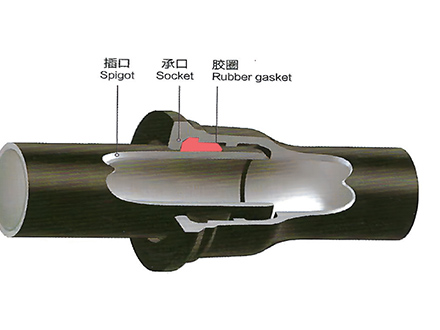 GT-type Joint Ductile Iron Pipe
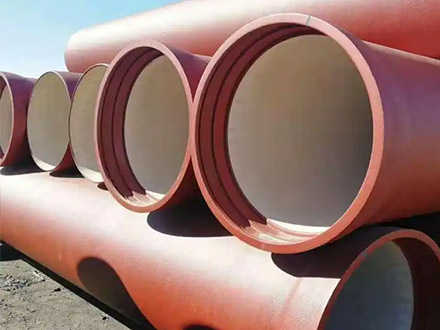
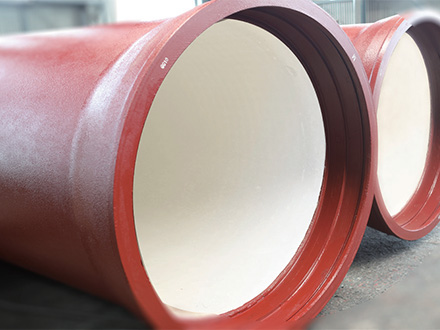 Sewage Pipe (Ductile Iron Sewage Pipe)
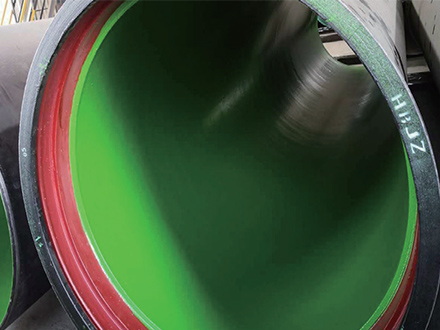 Special Coating Pipe (Ductile Iron Pipe with Special Coatings)