

Ductile Iron Pipe for Desalination and Reverse Osmosis (RO) Plants
The Gulf holds a large share of the world's desalination capacity, and every cubic metre produced travels through kilometres of pipe. Ductile iron pipe (DIP) carries a real but selective role across these streams, and lining choice decides whether a plant lasts decades or seasons. This guide maps where DIP fits in a desalination or reverse-osmosis (RO) plant and how a buyer should specify it. Our DIP solutions page outlines the full diameter and class range behind these applications.

The three streams that define pipe selection
A desalination plant moves three very different fluids, and each one asks something different from the pipe:
Seawater intake — raw, sand-laden, highly saline feed drawn from the coast to pretreatment. Large diameter, often DN600–DN1600, frequently buried or submerged.
Permeate (product water) — the low-salinity output of the RO train. Chemically mild, close to potable, and the easiest stream for DIP.
Brine / concentrate reject — the hyper-saline, often chemically dosed waste sent back to the sea. Aggressive on both internal and external surfaces.
Treating all three with one generic pipe spec is the most common design error; the lining choice should follow the stream, not the catalogue. The coating and lining page shows how internal and external protection are specified separately.
Seawater intake mains: abrasion meets corrosion
The intake line faces two threats at once — corrosive seawater and abrasive suspended sand. For the internal surface, a cement mortar lining is vulnerable to the saline chemistry and abrasion, so most Gulf intakes specify an epoxy or polyurethane (PU) lining that resists both. Externally, a buried or tidal-zone intake needs zinc + bitumen or a PE sleeve for the saline, high-temperature soil and splash zone covered in our saline soil corrosion guide. The external coating comparison helps weigh a PE sleeve against zinc-bitumen for the buried run.
Permeate lines: where cement lining is enough
Product water leaving the RO membranes is low in dissolved solids and close to drinking quality, so a standard cement mortar lining performs well and keeps cost down. The lining requirements follow the same logic as our cement lining standards note (ISO 2531 vs AWWA C104): a sound, continuous mortar layer protects the iron and meets potable-water acceptance where the project requires it. DIP's smooth bore also holds pumping energy down over the plant's life.
Brine reject: the line that demands the strongest lining
Brine carries the salt the membranes rejected, plus antiscalant and cleaning chemicals, at temperatures often above ambient. This is the harshest stream for any ferrous pipe, so specify a thick epoxy or PU lining and verify it against the actual brine chemistry, not a generic "corrosion resistant" clause. External protection should match the discharge route — a PE sleeve for buried sections, a reinforced coating for exposed outfalls. Because brine lines sit at the environmental discharge point, the lining certificate is as much a permit condition as a mechanical one.
Pressure class and hydraulics
Intake and permeate networks are mostly low-pressure or gravity-flow, so a standard K9 / C-class pipe with a sensible margin is usually sufficient. The high-pressure pumps live on the process side, not in the DIP network, so DIP is not asked to hold RO operating pressure — it carries the flows before and after treatment. Still, the dimensions and pressure class page should set the class from the worst-case pumping and surge condition, not the average, and thrust points need proper anchorage. Flexible T-type joints give the line deflection that plant yards often need around equipment; the flexible joint deflection guide covers how much angle is available.
Joints and plant-yard layout
Buried mains use T-type push-in joints for speed and tolerance of settlement; above-ground and equipment tie-ins use flanged joints for repeatable alignment. At elbows, tees, and dead-ends the internal pressure and the line's own weight create thrust that can pull joints apart, so these points need concrete thrust blocks or self-anchoring joints. The joints and connections page lays out the full joint menu and where each belongs. Getting joint type right at the layout stage avoids the retrofitted anchors that stall commissioning.
Standards and the documents behind them
Desalination piping is specified against ISO 2531, EN 545, or AWWA C151, with lining and coating referenced to EN 15542 / AWWA C104 as applicable. For permeate that may enter a potable network, potable-water approval of the lining is part of the file. Every order should be backed by a mill test certificate that records the class, lining, and batch, and the tender specification is where the required standard and lining are fixed before suppliers quote. The standards and certification page ties the product norms to the conformity evidence Gulf authorities expect.
Gulf project context
The GCC is the world's densest concentration of desalination capacity: Saudi plants at Jubail, Yanbu, and Shoaiba; UAE trains at Jebel Ali, Taweelah, and Fujairah; Qatar's Ras Abu Fontas and Ras Laffan; plus Kuwait and Oman. NEOM's planned water system adds a new build-out on the Red Sea coast. Each of these is a multi-year pipe demand centre where intake, permeate, and brine lines are specified and retendered in phases, which is exactly why lining discipline and certificate readiness matter from the first BOQ.
Buyer's specification checklist
Before issuing the BOQ, lock down: (1) the stream and its chemistry, (2) the internal lining and its standard, (3) the external coating for the buried or tidal zone, (4) the pressure class from worst-case surge, (5) the joint type per route, (6) the product standard (ISO 2531 / EN 545 / AWWA C151), and (7) the MTC and third-party inspection the customs file needs. The supplier document checklist confirms what to collect so the cargo and its papers clear together. A line called out by stream, not by catalogue number, is the line that survives commissioning. Inquire about specifications and pricing →
Frequently asked questions
Can one ductile iron pipe lining serve intake, permeate, and brine?
No — the three streams differ enough that a single lining is a compromise. Seawater and brine need epoxy or PU for corrosion and chemical resistance, while permeate runs fine on cement mortar. Specifying the lining per stream is cheaper over the plant's life than over-lining everything or under-lining the harsh lines.
Does DIP carry the high-pressure RO feed?
DIP is not the high-pressure membrane feed pipe; the RO pressure vessels and their stainless or duplex piping sit on the process side. DIP handles the intake, permeate, and brine flows where pressures are far lower. The pipe class should still cover pumping and surge, not just static head.
Which external coating suits a buried seawater intake?
A polyethylene sleeve or zinc + bitumen system both work, with PE favoured where the soil is wet, saline, and warm year-round. The choice tracks the burial environment more than the pipe size. Confirming the zone against a saline-soil corrosion review prevents early external failure.
What documents back a desalination pipe order?
The file rests on the product standard compliance statement, the mill test certificate per batch, lining and coating material certificates, and a third-party inspection release. Batch numbers should link every certificate to the physical pipe. A complete file is also what Gulf customs and the plant's own QA expect.
Why specify lining by stream instead of by catalogue?
A catalogue number hides the service condition, so two very different lines can end up with the same under-specified pipe. Calling out the stream makes the lining, class, and joint explicit and comparable across bids. That clarity is what stops a cheap bid from becoming a premature replacement.
Tiegu is a China-based ductile iron pipe sourcing and export partner serving international water infrastructure, wastewater, and industrial projects.
We supply DN80–DN2600 ductile iron pipes and fittings manufactured according to ISO 2531, EN 545, EN 598, and AWWA standards, with cement mortar lining, epoxy lining, and various external coating options.
From technical specification confirmation and supplier coordination to quality inspection, export documentation, and logistics support, Tiegu provides a reliable one-stop sourcing solution under a single commercial contract.
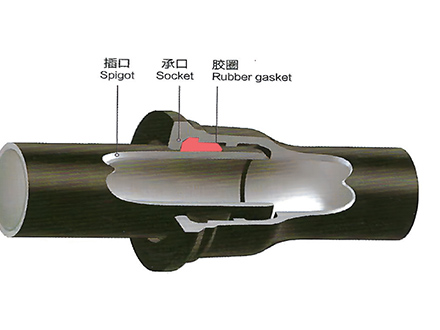 GT-type Joint Ductile Iron Pipe
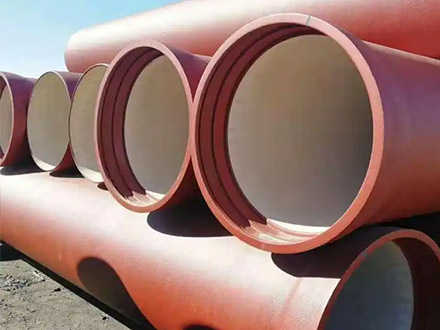
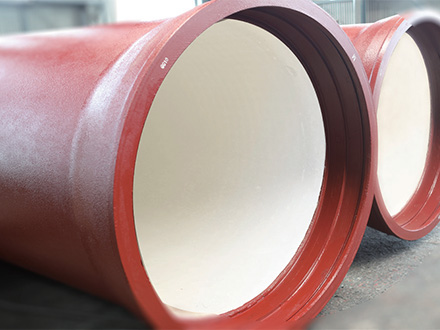 Sewage Pipe (Ductile Iron Sewage Pipe)
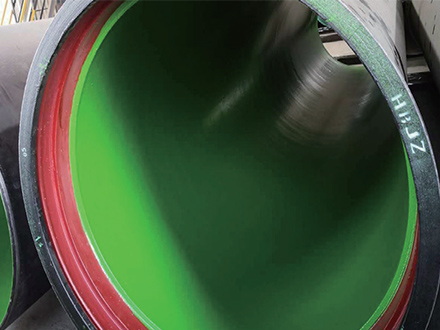 Special Coating Pipe (Ductile Iron Pipe with Special Coatings)