

Why 80% of Ductile Iron Pipe Joint Leaks Are Not Caused by Pipe Quality
Why 80% of Ductile Iron Pipe Joint Leaks Are Not Caused by Pipe Quality
When a ductile iron pipeline leaks at the joint, the first reaction is often:
“Is there a problem with the pipe quality?”
However, in most real projects, joint leakage is rarely caused by material defects.
Field experience shows that nearly 80% of joint leakage issues are related to installation practices, alignment control, or foundation conditions.
This article breaks down:
The most common causes of ductile iron pipe joint leakage
Which problems can be prevented during installation
Practical recommendations for project owners and contractors
For reference on joint types and connection structures, see:
👉Ductile Iron Pipe Joints & Connections
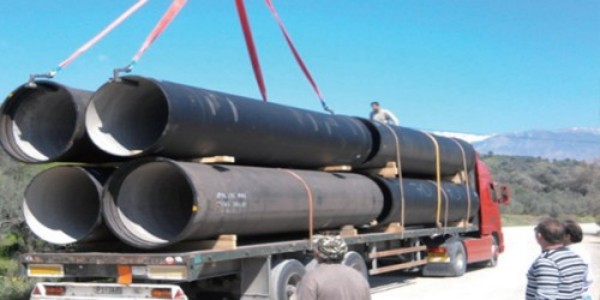
What Actually Causes Ductile Iron Pipe Joint Leakage?
1. Incorrect Rubber Gasket Installation
The gasket is the core sealing component. Leakage often occurs when:
The gasket is twisted during installation
It is not fully seated in the groove
Debris remains between gasket and socket
Even a small irregularity can create a leakage path once internal pressure increases.
Key point: Most gasket-related leaks are installation errors, not product defects.
2. Insufficient Pipe Insertion Depth
Each joint is designed with a specified insertion depth. Problems arise when:
The pipe is not fully inserted
Insertion marks are ignored
Resistance during assembly is not investigated
If the spigot does not reach the proper position, the gasket will not compress evenly.
This is one of the most overlooked causes of leakage.
3. Excessive Angular Deflection
Ductile iron pipe joints allow limited angular deflection to accommodate alignment changes.
However, exceeding this limit can:
Distort gasket compression
Concentrate stress on one side of the joint
Accelerate long-term leakage risk
Deflection should assist alignment — not replace proper trench preparation.
4. Poor Bedding and Differential Settlement
Joint leakage sometimes appears months after installation.
Common hidden causes include:
Uneven bedding under the joint
Voids beneath the pipe barrel
Inadequate compaction near the connection
When the ground settles unevenly, stress transfers directly to the joint area.
This is often mistaken for “pipe failure,” but the real issue lies in soil preparation.
5. Uncontrolled Axial Movement in Pressurized Pipelines
At bends and tees, internal pressure generates axial thrust forces.
If thrust blocks or restrained systems are not properly designed:
Joints may experience gradual separation
Micro-movement can damage the gasket seal
Leakage may occur during pressure testing or operation
Axial force control is essential in pressurized systems.
Which Leakage Problems Can Be Prevented During Construction?
Most joint leaks can be avoided if the following steps are taken during installation:
Inspect gasket seating before assembly
Clean socket and spigot surfaces thoroughly
Confirm correct insertion depth
Control angular deflection within specified limits
Ensure uniform bedding and proper compaction
Verify thrust restraint design before pressure testing
In other words, installation discipline is more important than pipe strength.
Practical Advice for Project Owners (Clients)
If you represent the project owner or supervising engineer:
Require documented joint installation procedures
Inspect insertion depth marks during construction
Check trench bedding before backfilling
Ensure axial restraint measures match design pressure
Joint leakage investigations should evaluate construction quality first, not immediately blame materials.
Practical Advice for Contractors
For contractors and installation teams:
Do not rush joint assembly
Train workers specifically on gasket handling
Avoid forcing alignment through excessive joint deflection
Treat the joint zone as a structural control point, not just a connection
Careful installation reduces long-term maintenance risk.
Are Manufacturing Defects Ever Responsible?
Manufacturing defects can occur in rare cases.
However, when pipes meet international standards and pass inspection, installation-related issues are statistically far more common.
Understanding this distinction helps avoid unnecessary disputes and project delays.
Final Insight
Most ductile iron pipe joint leaks originate on site — not in the factory.
Proper installation, alignment control, and soil preparation are the real safeguards against leakage.
For more technical information on ductile iron pipe joint systems, visit:
👉Ductile Iron Pipe Joints & Connections
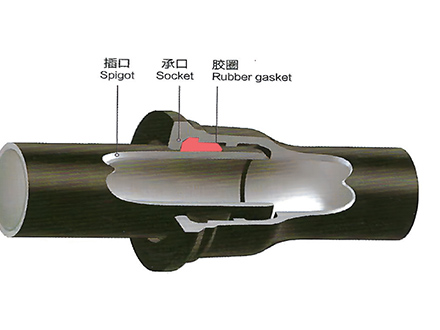 GT-type Joint Ductile Iron Pipe
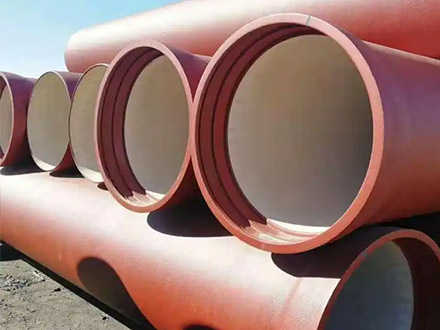
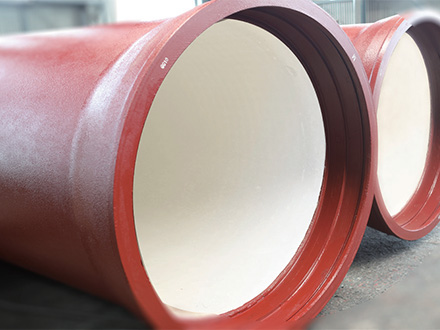 Sewage Pipe (Ductile Iron Sewage Pipe)
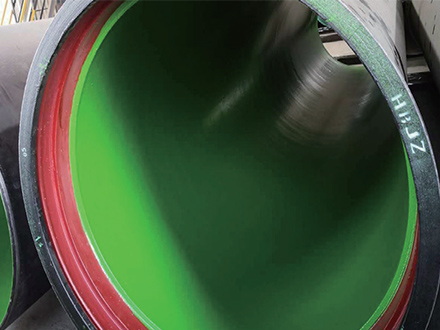 Special Coating Pipe (Ductile Iron Pipe with Special Coatings)