

How to Evaluate a Ductile Iron Pipe Supplier in China: A Complete Buyer Checklist

Supplier evaluation is the single most important step in sourcing ductile iron pipe (DIP) from China. Get it right, and your project runs on schedule. Get it wrong, and you spend months fighting quality disputes, absorbing replacement costs, and explaining delays to your client.
Evaluating DIP suppliers in China and not sure where to start? Most buyers compare prices and pick the lowest quote. That approach works until it doesn't — and when it fails, the cost is enormous.
Tiegu has coordinated DIP sourcing for international water projects across multiple regions. This is the evaluation framework we use before recommending any supplier to a buyer.
Why most supplier evaluations fail
The typical evaluation process goes like this: buyer sends an inquiry, receives three quotes, compares prices, and picks the cheapest. Sometimes they ask for an ISO certificate. Rarely do they audit technical capability or test documentation quality.
The result: the supplier looks fine on paper, but when production starts, problems surface that should have been caught weeks earlier.
| What buyers check | What they should check |
|---|---|
| Price per ton | Total cost: pipe + coating + fittings + testing + packing + freight |
| "Are you ISO certified?" | Is the ISO certificate valid, in-scope, and specific to DIP? |
| Factory photos | Live video walk-through during working hours |
| Delivery time promised | Actual production capacity vs. your order volume |
| Generic product catalog | Sample MTC from a recent comparable order |
A structured evaluation takes 2–3 days. It saves months of rework.
Phase 1 — Pre-qualification screening
Before investing time in a deep audit, run five binary pass/fail checks. If a supplier fails any one, eliminate them.
| # | Criterion | Pass | Fail |
|---|---|---|---|
| 1 | Can they produce to your specified standard? | ISO 2531 / EN 545 / AWWA C151 confirmed in writing | "We can do all standards" without specifics |
| 2 | Can they produce your diameter range? | Factory confirms DN range with production records | Vague "yes, all sizes" without evidence |
| 3 | Will they accept third-party inspection? | Yes, written into the contract | "Not necessary" or "we have our own QC" |
| 4 | Do they provide batch-specific MTCs? | EN 10204 3.1 or 3.2 confirmed | "We provide a general certificate" |
| 5 | Is the price within ±15% of market average? | Transparent cost breakdown | Suspiciously low without explanation |
A price 20% below market average almost always means something is missing: wall thickness, zinc coating weight, cement lining thickness, or test frequency. See our standards & certification page for what compliant documentation looks like.
Phase 2 — Technical capability audit
Suppliers that pass pre-qualification need a deeper technical audit. Focus on four areas.
Production capacity. Ask: How many centrifugal casting lines do you operate? What is your monthly output for my diameter range? A supplier claiming 200,000 tonnes/year but unable to show you a running production line is a warning sign.
Testing equipment. A qualified DIP factory should have in-house: spectrometer (chemistry), tensile testing machine, hardness tester, hydrostatic testing equipment, and cement lining thickness measurement. If all testing is outsourced, batch traceability and response time suffer.
Coating and lining capability. Can they apply the specific coating system your project requires — cement mortar lining, zinc + bitumen, epoxy, or PE encasement? Some factories only offer standard zinc + bitumen and outsource specialty coatings, which adds lead time and quality risk. See the coating & lining systems page for the full range.
Diameter and pressure class range. Confirm they have actually produced your specific combination (e.g., DN1200 K9) recently, not just that it's theoretically within their range. Check the dimensional reference to verify your spec is standard.
Phase 3 — Documentation quality test
Here is a test that takes 30 minutes and tells you more than a factory brochure.
Send the supplier a one-page spec sheet: diameter, pressure class, standard, coating, quantity, destination port. Then evaluate what comes back.
Green flags:
Response within 24 hours with technical questions (wall thickness class? K9 or K12? Cement lining grade?)
Sample MTC from a comparable previous order, with real heat numbers and test values
Clear statement of what is and isn't included in the price
Red flags:
Quote arrives in 2 hours with no technical questions — they didn't read the spec
MTC is generic, with no heat numbers or batch references
Price is broken down as "pipe + everything else" — "everything else" hides coating, testing, and packing costs
Read more on what documents a reliable supplier should provide.
Discuss your project requirements with Tiegu →
Phase 4 — Commercial risk assessment
Technical capability is necessary but not sufficient. The commercial structure determines what happens when things go wrong.
| Item | What to require |
|---|---|
| Payment terms | Avoid 100% upfront. Use L/C or 30/70 split (deposit/balance on B/L copy) |
| Quality dispute clause | Define rejection criteria, remake timeline, and cost responsibility |
| Warranty period | Minimum 12 months from B/L date for coating and lining defects |
| Price adjustment triggers | Raw material index clause if lead time exceeds 60 days |
| Incoterms clarity | FOB, CIF, or DAP — each has different risk allocation |
A supplier that resists writing quality dispute terms into the contract is telling you they don't expect to honor them.
Phase 5 — Track record verification
Ask for proof, not claims.
Reference projects: Request 2–3 recent export projects with similar diameter and standard. Ask for bill of lading copies (destination port and date redacted if confidentiality is a concern).
Export experience to your region: A supplier who has shipped to the Middle East understands SASO compliance. One who hasn't will learn at your expense.
Third-party inspection history: Has the supplier worked with SGS, BV, or TÜV before? Can they share a previous inspection report (buyer name redacted)? A supplier with no third-party inspection history may be new to export quality standards.
For a deeper look at manufacturer verification, see how to verify if a supplier is a real manufacturer and our supplier selection guide for South African projects.
DIP-specific red flags
These warning signs are specific to ductile iron pipe sourcing:
| Red flag | What it usually means |
|---|---|
| Price 20%+ below market | Reduced wall thickness, lower zinc weight, or skipped hydrostatic testing |
| MTC with round numbers on all values | Fabricated — real test results have variation |
| No heat number on pipe body or MTC | No batch traceability — quality claims are unverifiable |
| Refuses pre-shipment inspection | They know the pipes won't pass |
| "All standards" without specifying | They don't understand the difference between ISO, EN, and AWWA |
| Inconsistent diameter answers | Salesperson doesn't understand the product |
FAQ
How many suppliers should I evaluate?
Shortlist 4–5, run pre-qualification on all, then deep-audit the 2–3 that pass. Evaluating more than 5 spreads your effort thin without improving the final choice.
Do I need to visit the factory in person?
For orders under 500 tonnes, a live video audit is sufficient. For large infrastructure contracts (1,000+ tonnes, government-funded), an on-site audit or third-party factory inspection is worth the investment.
What if the supplier passes evaluation but the first order has problems?
This is why pre-shipment inspection exists. Evaluation reduces the probability of problems; it doesn't eliminate them. Build inspection into the contract regardless of how well the supplier scored.
How often should I re-evaluate an existing supplier?
Annually for routine reorders. Immediately if you notice documentation quality dropping, lead times slipping, or new personnel who don't understand your technical requirements.
Is a lower price always a red flag?
Not always — but a price significantly below market average always requires explanation. Ask for a cost breakdown. If the supplier can't explain the gap, the difference is coming out of your product somewhere.
Tiegu is a China-based ductile iron pipe sourcing and export partner serving international water infrastructure, wastewater, and industrial projects.
We supply DN80–DN2600 ductile iron pipes and fittings manufactured according to ISO 2531, EN 545, EN 598, and AWWA standards, with cement mortar lining, epoxy lining, and various external coating options.
From technical specification confirmation and supplier coordination to quality inspection, export documentation, and logistics support, Tiegu provides a reliable one-stop sourcing solution under a single commercial contract.
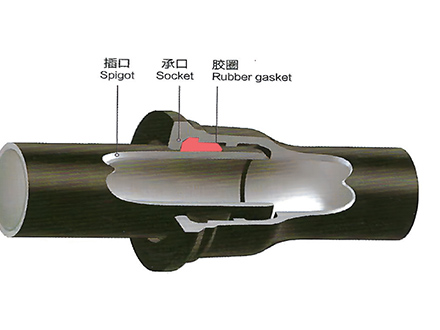 GT-type Joint Ductile Iron Pipe
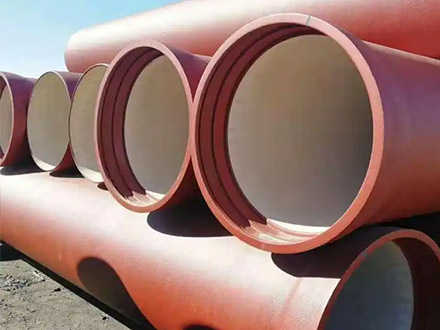
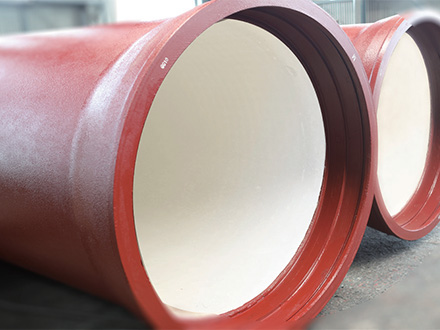 Sewage Pipe (Ductile Iron Sewage Pipe)
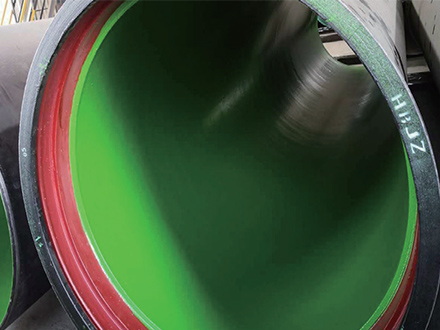 Special Coating Pipe (Ductile Iron Pipe with Special Coatings)