

Ductile Iron Pipe Coating Selection Decision Framework
Every ductile iron pipe needs two protection layers — an internal lining against the fluid, and an external coating against the soil. The mistake most buyers make is specifying only one, or specifying by habit instead of by condition. So how do you pick the right combination? At Tiegu, we help buyers build the coating specification from the project environment up, not from a catalogue.

Start with two separate questions
Coating selection is not one decision. It is two, and they are independent:
What flows inside the pipe? That decides the internal lining.
What surrounds the pipe in the ground? That decides the external coating.
A water pipeline in neutral soil and a seawater intake line in corrosive coastal soil need completely different external systems, even if the fluid inside is the same. Treat them separately, then combine.
Step 1 — Pick the internal lining by fluid
The lining protects water quality and the pipe wall from the conveyed fluid.
| Fluid / water type | Recommended internal lining |
|---|---|
| Potable water, neutral pH | Cement mortar lining (CML) |
| Soft or low-mineral / direct-drinking water | Cement mortar + epoxy seal layer, or polyurethane (PU) lining |
| Municipal wastewater / sewage with H₂S | High-alumina cement or epoxy-ceramic lining |
| Industrial wastewater / aggressive chemicals | Polyurethane (PU) lining |
Cement mortar lining follows AWWA C104 / EN 545 for drinking water. For soft water, plain cement can leach calcium and roughen the bore — an epoxy seal or PU lining avoids that. For H₂S-bearing sewage, standard cement breaks down; an epoxy-ceramic or high-alumina lining is the spec that survives.
Step 2 — Pick the external coating by soil
First, judge how corrosive the soil is. Three field indicators:
Soil resistivity: >100 Ω·m is mild; 10–100 Ω·m is moderate; <10 Ω·m is severe.
pH: outside the 4–9 range, plan for aggressive protection.
Chlorides / sulfates: coastal, industrial, or saline soils push you up a level.
Then match the external system:
| Soil condition | Recommended external coating |
|---|---|
| Mild / neutral soil | Zinc spray + bitumen (sacrificial anode + barrier) |
| High corrosion (coastal, industrial) | Zinc + bitumen + polyethylene (PE) film encasement |
| Severe / extreme (high salinity, chemical) | Polyurethane or custom system |
Zinc coating follows ISO 8179 (typically 200 g/m²); PE encasement follows ISO 8180. Zinc alone gives sacrificial protection, but in coastal or high-chloride soil it is consumed faster — add PE film to keep the pipe isolated from the soil.
Step 3 — Combine into a full specification
The coating is the pairing, not either layer alone. Typical combinations:
| Project scenario | Internal lining | External coating |
|---|---|---|
| City drinking water, normal soil | Cement mortar lining | Zinc + bitumen |
| Coastal potable water | Cement mortar lining | Zinc + bitumen + PE film |
| Sewer force main (H₂S present) | Epoxy-ceramic lining | PU or high-build epoxy |
| Industrial effluent line | Polyurethane lining | Polyurethane coating |
| Desert / dry but corrosive soil | Cement mortar lining | Zinc + bitumen (add PE if saline) |
If you want the deeper material and process detail behind each option, our coating and lining overview covers thickness, standards, and service life by environment.
Common mistakes buyers make
Writing only "cement lined" with no standard or thickness. That leaves the supplier to pick the cheapest compliant option, which may not suit your water.
Using zinc alone on a coastal project. It works — until the zinc is spent. PE encasement is what carries the protection past the design life.
Treating lining and coating as one item. They fail for different reasons and must be specified separately.
Specifying standard cement mortar for soft or aggressive water. It leaches or degrades; an epoxy seal or PU lining is the correct call.
What to write in your purchase order
Internal lining — type, standard (AWWA C104 / EN 545), and thickness
External coating — zinc mass (g/m² per ISO 8179), bitumen, and whether PE film (ISO 8180) is required
Potable-water certification — WRAS or NSF/ANSI 61 where drinking water is involved
Pipe class and diameter, so the lining thickness is matched to the wall
For aggressive-soil projects, also see our high-corrosivity soil guide and the external coating comparison for the trade-offs between zinc and PE.
FAQ
Can I use cement lining for wastewater?
Standard cement mortar breaks down in H₂S-bearing sewage because the sulfide attacks the calcium in the cement. Use a high-alumina cement or an epoxy-ceramic lining for force mains and corrosive wastewater, or plan for early relining. Gravity sewers at low pressure can sometimes use standard cement, but have your engineer confirm before specifying it.
Is zinc coating enough for coastal projects?
For mild coastal exposure it may last, but in high-chloride or tidal soils the zinc is consumed relatively quickly through galvanic action. Add PE film encasement (ISO 8180) to isolate the pipe from the soil and reach a 50+ year service life. Without that barrier, the zinc protects for a while and then the pipe is exposed again, usually starting at the joints.
What zinc thickness is standard?
The common specification is 200 g/m² of zinc (ISO 8179), followed by a bituminous or epoxy topcoat. Some aggressive environments specify aluminium-zinc alloys for longer life, and the mass should match your soil resistivity class. Always state the standard and exact mass in the purchase order so the supplier cannot substitute a thinner layer.
Do fittings need the same coating as the pipe?
Yes. Fittings sit in the same soil and carry the same fluid, and they are common corrosion starting points because of their shape and joints. Specify the same lining and coating system, or the pipeline fails at the joints even if the straight pipe is fine. This is often missed when fittings are priced separately from the pipe in a budget.
How do I find out my soil corrosivity?
A geotechnical or soil-resistivity test gives resistivity, pH, and chloride/sulfate levels — that is the reliable input. If that is not available, treat unknown buried soil as at least moderate and specify zinc + bitumen + PE as a safe default for important lines. Re-test before finalizing the spec if the project is large or the soil is known to vary across the route.
Need a coating specification checked against your actual project conditions? Inquire about specifications and pricing →
Tiegu is a China-based ductile iron pipe sourcing and export partner serving international water infrastructure, wastewater, and industrial projects.
We supply DN80–DN2600 ductile iron pipes and fittings manufactured according to ISO 2531, EN 545, EN 598, and AWWA standards, with cement mortar lining, epoxy lining, and various external coating options.
From technical specification confirmation and supplier coordination to quality inspection, export documentation, and logistics support, Tiegu provides a reliable one-stop sourcing solution under a single commercial contract.
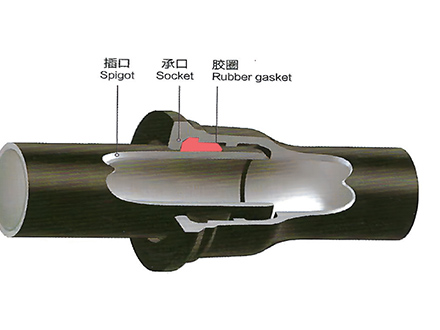 GT-type Joint Ductile Iron Pipe
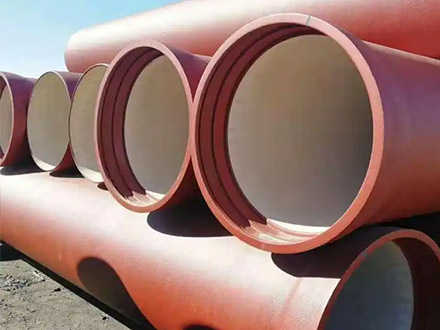
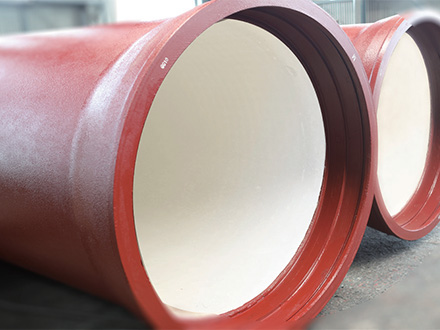 Sewage Pipe (Ductile Iron Sewage Pipe)
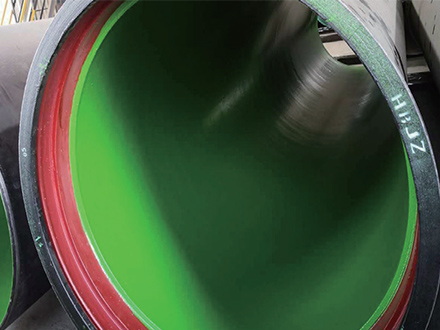 Special Coating Pipe (Ductile Iron Pipe with Special Coatings)