

Cement Lined vs Epoxy Lined Ductile Iron Pipe: Which One Do You Need?
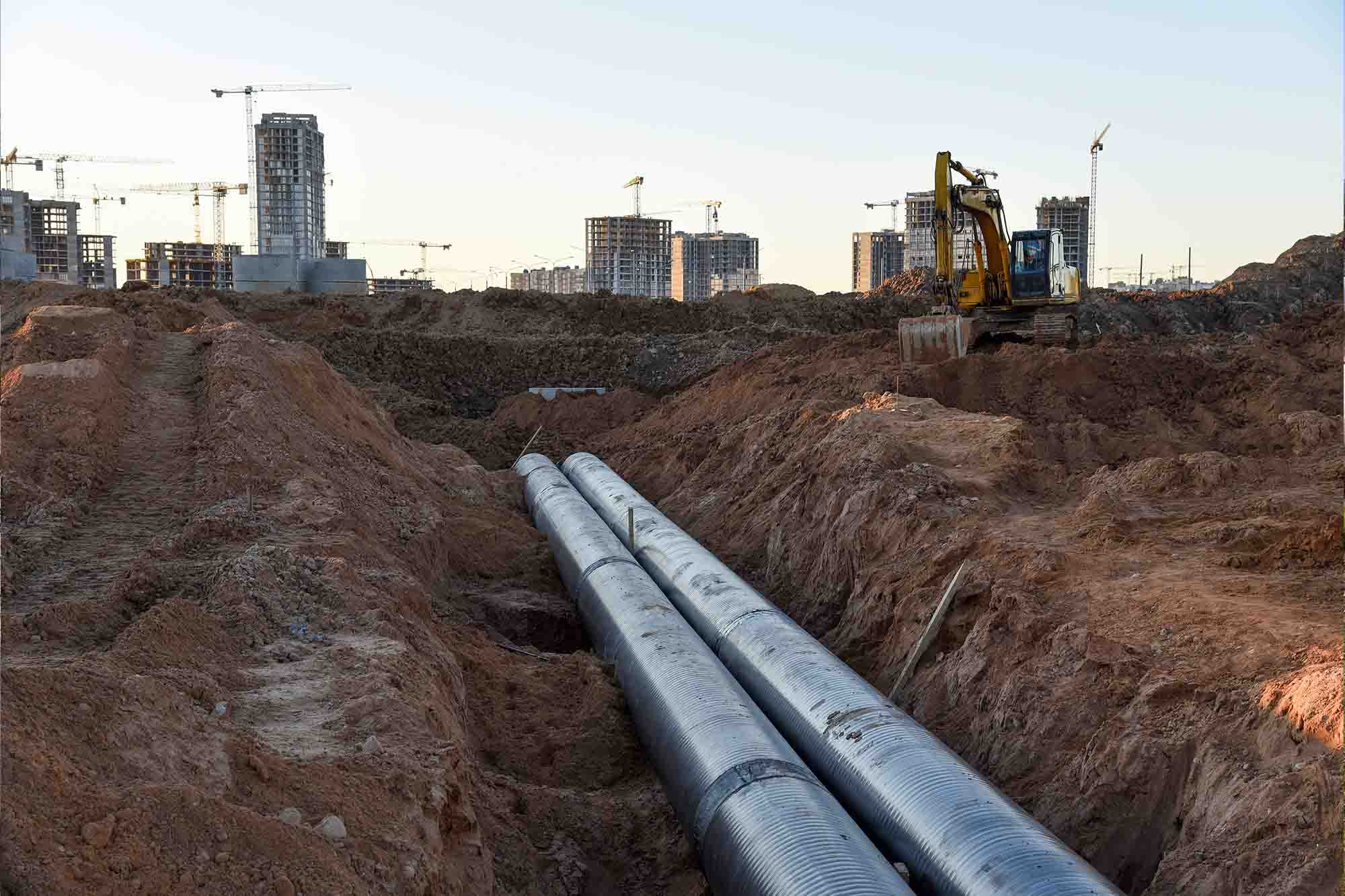
Cement lined and epoxy lined ductile iron pipe solve the same basic problem — protecting the iron from corrosion — but they're not interchangeable, and neither is simply "better" than the other. Cement lining is the default, lowest-cost choice for standard potable water distribution, backed by over a century of field service history. Epoxy lining is specified when water chemistry is too aggressive for cement, or for sanitary sewer and wastewater applications where cement lining genuinely isn't the right tool for the job. Which one your project needs depends on what's actually flowing through the pipe, not on which lining sounds more advanced.
1. Core Differences at a Glance
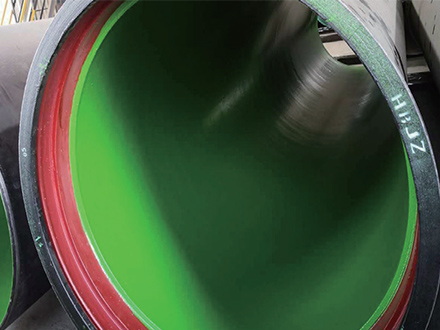
| Cement mortar lining | Epoxy lining (incl. ceramic epoxy) | |
|---|---|---|
| Application process | Centrifugally cast, cured at the factory | Sprayed or applied coating, cured onto prepared substrate |
| Typical thickness | A few millimeters, increasing with pipe diameter | Thin — roughly 1–2 mm, generally does not scale with diameter |
| Primary use case | Potable water, reclaimed water, general water distribution | Sanitary sewer, wastewater, aggressive or acidic industrial water |
| Cost tier | Lower — standard, high-volume process | Higher — specialized coating process and substrate preparation |
| Field service history | 100+ years of documented performance | Several decades of documented performance |
| Self-healing property | Yes — minor cracks reseal via calcium carbonate formation | Not a comparable documented property |
Although both lining systems protect ductile iron from corrosion, they work through entirely different mechanisms. Cement lining forms a mineral barrier and creates an alkaline environment that suppresses corrosion, while epoxy lining isolates the pipe with a chemically resistant polymer coating. Understanding this difference helps explain why each lining performs better under different service conditions.
2. When Cement Lining Is the Right Choice
Cement lining is the correct default for the large majority of ductile iron pipe applications:
Standard potable water distribution — cement lining's century-long track record and lower cost make it the default unless a specific condition rules it out.
Reclaimed and general water distribution — the same logic applies where water chemistry is within normal, non-aggressive ranges.
Cost-sensitive projects — where water conditions don't demand a specialty lining, cement lining delivers proven performance at the lower cost tier.
For the full mechanism of how and why cement lining protects pipe, see [What Is Cement Lined Ductile Iron Pipe?] and [Why Are Ductile Iron Pipes Cement Lined?]
3. When Epoxy Lining Is the Right Choice
Epoxy (and ceramic epoxy) lining earns its higher cost in specific conditions where cement lining falls short:
Sanitary sewer and wastewater service. This is worth stating plainly: cement lining's protective mechanism — raising pH and forming a physical barrier against corrosive water — provides essentially no benefit in typical sanitary sewer conditions, where hydrogen sulfide gas and acidic conditions attack cement directly rather than being neutralized by it. Ceramic epoxy linings were specifically developed for this environment and have an established track record in sewer service where cement lining is not appropriate.
Aggressive or highly acidic industrial water. Where process water chemistry would degrade cement lining over time, epoxy's chemical resistance is the better fit.
Projects requiring a thinner lining with a constant cross-section regardless of diameter — since epoxy lining thickness generally doesn't scale with pipe diameter the way cement mortar does, it can be a relevant factor in certain hydraulic designs.
If wastewater contains prolonged hydrogen sulfide (H₂S) exposure or sulfuric acid generation, cement mortar lining alone is generally not recommended because acidic conditions gradually attack the cement matrix. In these environments, epoxy or ceramic epoxy lining is typically specified.
4. A Point Worth Knowing: Track Record and the Flow-Coefficient Debate
Epoxy lining manufacturers commonly claim flow performance equal to or better than cement mortar lining. This isn't an unreasonable claim — epoxy linings are smooth — but it's worth knowing that independent engineering research has specifically investigated whether epoxy or polyurethane linings produce measurably lower head loss than cement mortar, without reaching a settled, one-sided conclusion in epoxy's favor. In practice, both lining types perform well hydraulically when properly applied; the more meaningful difference for most buyers is track record, not marginal flow performance.
On that point: cement mortar lining has documented field performance exceeding 100 years, including pipe still in productive service after roughly a century with minimal tuberculation. Epoxy and ceramic epoxy linings have a shorter, though still substantial, service history spanning several decades. For long-design-life municipal water infrastructure, this difference in track record is a legitimate factor in specification decisions — not because epoxy is unproven, but because cement lining's data set simply spans a longer period.
5. Procurement Perspective: Cost and Lead Time
From a sourcing standpoint, the two linings aren't produced the same way, and that has practical implications for buyers:
Cement lining is a standard, high-volume factory process — centrifugal casting is built into normal ductile iron pipe production, so lining availability and lead times generally align with standard pipe manufacturing schedules.
Epoxy and ceramic epoxy lining requires specialized coating equipment and substrate preparation, which not every factory is set up to perform in-house. This can mean longer lead times, higher minimum order considerations, and a narrower pool of qualified suppliers compared to cement-lined pipe.
For distributors and project buyers who need epoxy-lined pipe, working with a supplier that can confirm which factories in its network are actually equipped and qualified for epoxy application — rather than assuming any ductile iron pipe factory can supply it interchangeably — helps avoid lead-time surprises later in the project.
Before requesting epoxy lining, buyers should confirm not only that the supplier offers epoxy-lined pipe, but also whether the coating is applied in-house or outsourced, as this can affect lead time, quality control, and documentation.
6. How to Choose
| Application | Recommended Lining |
|---|---|
| Potable water | Cement mortar |
| Municipal water | Cement mortar |
| Raw water | Cement mortar |
| Reclaimed water | Cement mortar |
| Sanitary sewer | Epoxy |
| Industrial wastewater | Epoxy |
| Acidic process water | Epoxy |
| Neutral cooling water | Cement |
7. Frequently Asked Questions
Is epoxy lining better than cement lining?
Not universally — each is better suited to different conditions. Cement lining is the proven, lower-cost default for standard potable water service. Epoxy lining is the right choice for sanitary sewer, wastewater, and aggressive water chemistry where cement lining isn't effective.
Can cement lined pipe be used for sewer service?
Generally not recommended. Cement lining's corrosion protection mechanism doesn't function effectively against the hydrogen sulfide and acidic conditions typical of sanitary sewer environments, which is exactly why epoxy linings were developed for this application. See [Can Cement Lined Ductile Iron Pipe Be Used for Wastewater?] for the full breakdown of when cement lining is and isn't appropriate for wastewater-adjacent uses.
Does epoxy lining cost more than cement lining?
Generally yes — epoxy and ceramic epoxy lining involve a more specialized application process and substrate preparation than the standard centrifugal cement lining process, which typically puts it in a higher cost tier.
Which lining has a longer track record?
Cement mortar lining, by a significant margin — over a century of documented field service versus several decades for epoxy and ceramic epoxy linings. Both are considered proven for their intended applications, but cement lining's data set is longer.
Can a project use both lining types?
Yes — it's common for a project to specify cement-lined pipe for potable water sections and epoxy-lined pipe for sewer or wastewater sections within the same overall system, matching the lining to each pipeline's actual service conditions.
Choosing between cement and epoxy lining depends on your project's water conditions, and getting that specification right before production begins avoids costly mismatches later. Tiegu helps international buyers confirm the right lining specification for their application and coordinates across qualified factories — including those equipped for specialized epoxy application — to match supply to the actual project requirement.
📐 Engineers & project buyers: Tell us your application (potable water, sewer, or industrial) and water conditions, and we'll confirm the appropriate lining specification and supplier options. Submit your project requirements →
📦 Distributors & trading companies: Need both cement-lined and epoxy-lined pipe across different projects? We coordinate across multiple qualified factories to match the right lining to each order. Get a quotation →
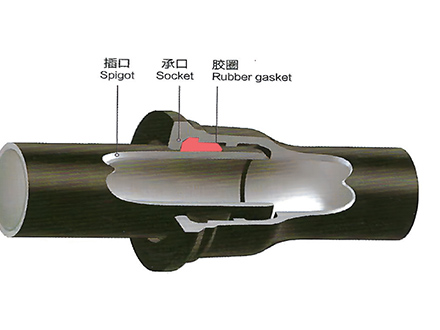 GT-type Joint Ductile Iron Pipe
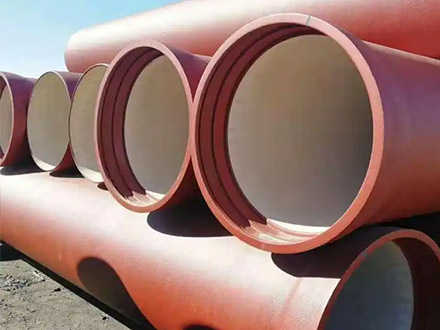
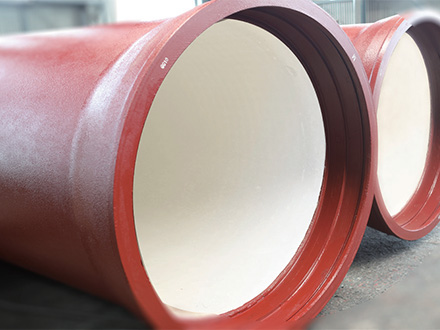 Sewage Pipe (Ductile Iron Sewage Pipe)
 Special Coating Pipe (Ductile Iron Pipe with Special Coatings)