

What Is Cement Lined Ductile Iron Pipe? Composition, Standards & How It Works
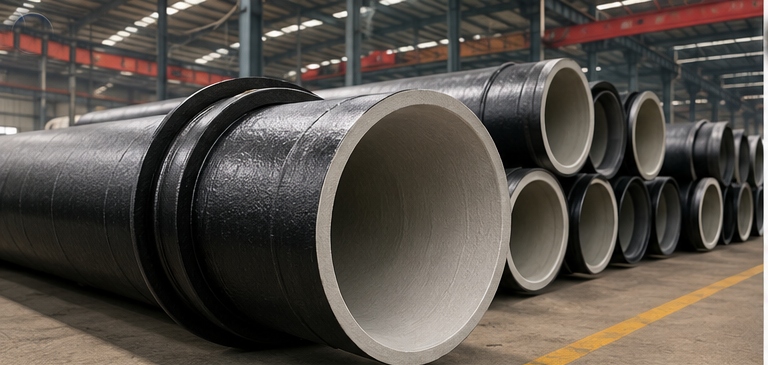
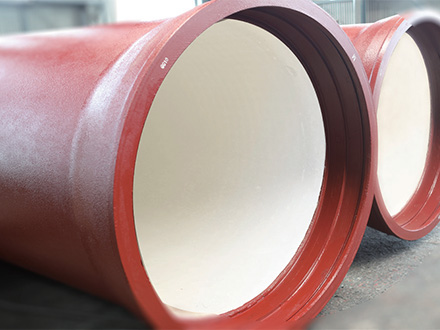
Cement lined ductile iron pipe is ductile iron pipe with a layer of cement mortar applied to its interior surface, centrifugally spun on at the factory to create a smooth, uniform barrier between the water and the iron pipe wall. The lining's main job is to stop the iron from directly contacting the water — which prevents tuberculation (mineral scale buildup that narrows the pipe over time) and keeps the interior smooth enough to maintain strong flow rates for decades. It's been used since 1922, and today it's the default lining specified for virtually all ductile iron pipe used in water distribution, unless a project specifically calls for something else.
If you've come across DN, K-class, or C104 references while researching this and aren't sure how they connect, this article covers the fundamentals — composition, how the lining is applied, the standards that govern it, and where it's actually used — with links to deeper coverage on cost, standards comparisons, and specific applications further down.
1. What the Lining Is Made Of
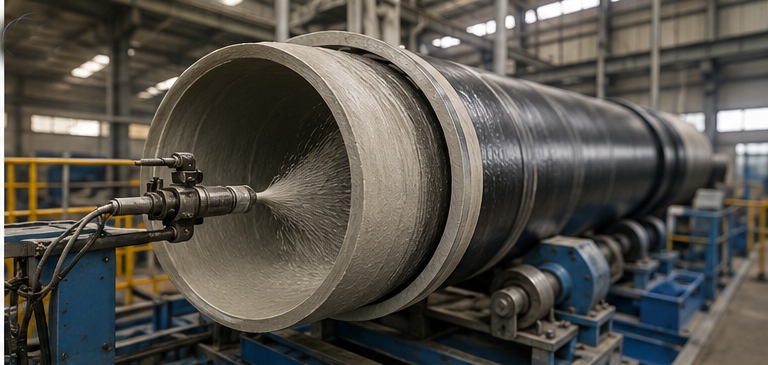
Cement lining isn't just concrete poured into a pipe — it's a specific mortar mix and application process designed to bond permanently to the iron and hold up under decades of continuous water contact:
Material: A mortar of Portland cement and fine silica sand, mixed to a controlled ratio for strength and workability.
Application: Applied by centrifugal casting — the pipe spins at high speed while the wet mortar is fed in, so centrifugal force presses it evenly against the interior wall. This produces a consistent thickness along the full length of the pipe, which is difficult to replicate with manual or field-applied lining methods.
Curing: The lined pipe is cured under controlled temperature and humidity before shipment, allowing the cement to reach full strength and bond properly to the iron substrate before it ever reaches a job site.
The result is a smooth, dense interior surface, typically a few millimeters thick depending on pipe diameter (larger pipes get proportionally thicker linings — this is covered in detail in our lining thickness and inspection guide).
2. Why Pipe Gets Cement Lined (Short Version)
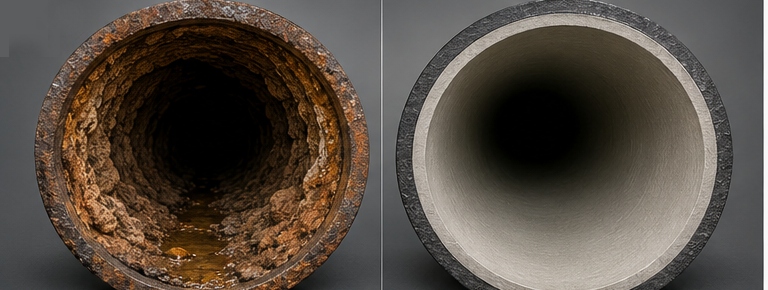
In brief: bare iron in contact with water corrodes and builds up tuberculation — mineral deposits that roughen the interior surface, reduce the effective bore, and increase friction losses over time. Cement lining creates a physical barrier against this, and also raises the pH at the pipe wall, which further suppresses corrosion. The combined effect is a pipe that keeps its original flow capacity for far longer than an unlined one.
For the full explanation of the corrosion mechanism, flow-coefficient math, and long-term cost impact, see our companion article: [Why Are Ductile Iron Pipes Cement Lined?]
3. The Standards That Govern Cement Lining
Cement lining isn't applied ad hoc — it's manufactured to formal specifications that define composition, thickness, and testing. Which standard applies depends on where your project is based:
| Standard | Region | What it covers |
|---|---|---|
| ISO 2531 / EN 545 (Annex) | Europe, Middle East, Africa, most of Asia, South America | Cement mortar lining requirements for DN-sized ductile iron pipe under the metric system |
| ANSI/AWWA C104/A21.4 | United States and projects specifying US standards | Cement mortar lining requirements for AWWA C151-manufactured pipe |
Both standards achieve the same functional goal — a bonded, uniform-thickness cement barrier — but they differ in minimum thickness requirements, testing methods, and how they're referenced in project specifications. If your project documents cite one standard and your supplier defaults to the other, that mismatch should be flagged and resolved before ordering, not discovered at inspection.
A full side-by-side breakdown of thickness requirements and testing differences between these two standards is covered in [ISO 2531 vs AWWA C104: Cement Lining Requirements Explained].
4. Key Performance Characteristics
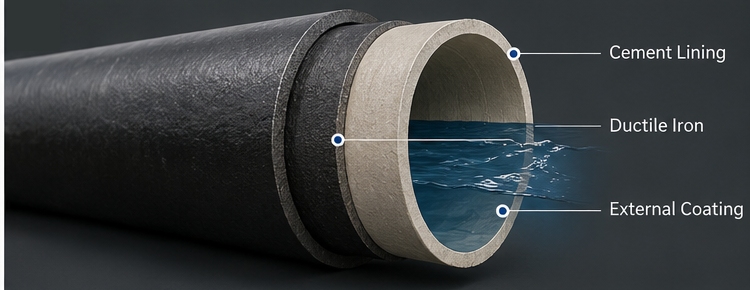
A few properties explain why cement lining has remained the industry default for a century:
High flow coefficient. Cement-lined pipe maintains a Hazen-Williams flow coefficient around 140 — smooth enough that it doesn't meaningfully restrict flow even after long service, unlike bare iron, which roughens and slows flow as tuberculation builds up.
Temperature tolerance. Standard cement lining performs reliably up to roughly 212°F (100°C), which covers virtually all potable water, reclaimed water, and general water distribution applications. (Note: if the pipe also carries a standard asphaltic external coating, the practical temperature ceiling for the assembly is lower — worth confirming with your supplier for high-temperature applications.)
Self-healing behavior. This is a lesser-known but well-documented property: if the cement lining develops small cracks — from handling, minor ground movement, or thermal stress — continued exposure to water causes calcium carbonate to form and re-seal the cracks over time, a process known as autogenous healing. Laboratory and field testing on pipe in long-term service has confirmed lining integrity is largely restored, not permanently compromised, after this healing process.
5. Where Cement Lined Ductile Iron Pipe Is Used
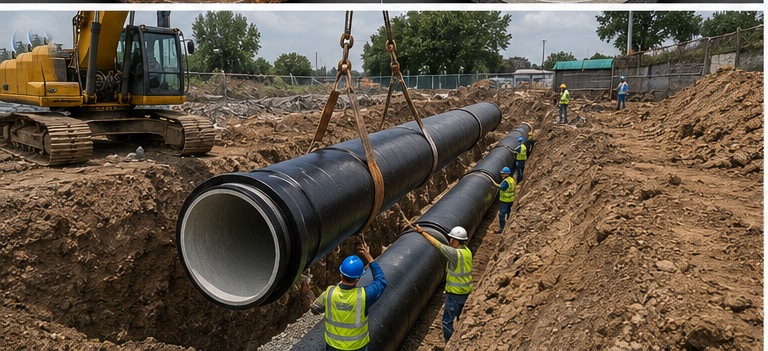
Cement lining is the standard specification for:
Potable water distribution — by far the most common application, and the default lining unless a project specifies otherwise
Reclaimed/recycled water systems
Some sewage and wastewater applications — though this depends on the specific chemistry and flow conditions involved, since not all wastewater is compatible with standard cement lining
Wastewater use isn't universal — see [Can Cement Lined Ductile Iron Pipe Be Used for Wastewater?] for when cement lining is appropriate versus when a specialty lining is needed instead.
6. Cement Lining vs. Other Lining Options
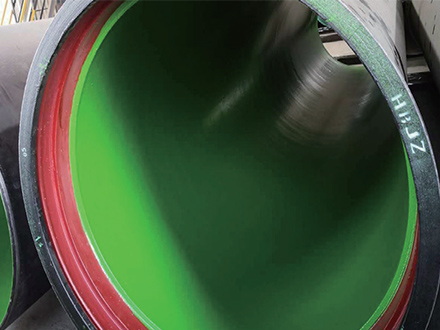
Cement mortar is the default, but it isn't the only lining option. Epoxy lining is the most common alternative, typically specified where water chemistry is aggressive enough that cement lining alone isn't sufficient, or where a thinner, chemical-resistant barrier is preferred. The two aren't simply "better" or "worse" than each other — they suit different water conditions.
For a full technical and cost comparison, see [Cement Lined vs Epoxy Lined Ductile Iron Pipe].
7. Frequently Asked Questions
Is cement lined ductile iron pipe safe for drinking water?Yes — cement mortar lining manufactured to ISO 2531/EN 545 or ANSI/AWWA C104 standards uses inert, non-toxic materials and is specifically formulated for potable water contact. It's the default lining used in municipal drinking water systems worldwide. Projects requiring specific certification (such as NSF/ANSI 61 for North American systems) should confirm this with their supplier at the quotation stage.
Does cement lining come standard, or does it cost extra?Cement lining is the standard, default specification for ductile iron pipe in water applications — most pipe manufactured today ships with it unless a buyer specifically requests bare pipe or a different lining. It's generally not treated as a premium add-on the way specialty linings are.
How thick is the cement lining?Thickness scales with pipe diameter — larger-diameter pipe gets a proportionally thicker lining under both ISO 2531/EN 545 and AWWA C104. See our detailed thickness and inspection guide for exact figures by DN size.
Can cement lined pipe crack, and does that mean it fails?Minor cracking can occur from handling or ground movement, but it doesn't necessarily mean the lining has failed. Cement mortar has a documented self-healing property — continued water exposure causes cracks to re-seal through mineral deposition over time. Significant or widespread damage should still be inspected and evaluated case by case.
Is cement lined ductile iron pipe the same worldwide?The function is the same, but the governing standard isn't — pipe manufactured to ISO 2531/EN 545 and pipe manufactured to ANSI/AWWA C104 meet different regional specifications for thickness and testing. Confirm which standard your project requires before ordering.
Looking to specify or source cement lined ductile iron pipe for a project?
📐 Engineers & project buyers: Tell us your governing standard (ISO 2531/EN 545 or AWWA C104), pipe sizes, and application, and we'll confirm lining specifications and supply options across our factory network. Submit your project requirements →
📦 Distributors & trading companies: Need cement lined pipe across multiple sizes for a mixed order? We coordinate across multiple qualified factories to consolidate shipments efficiently. Get a quotation →
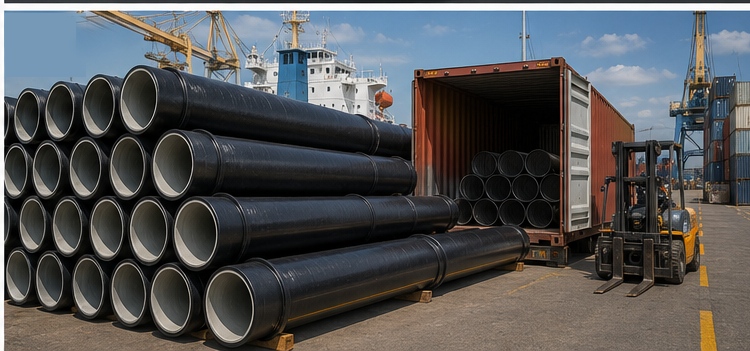
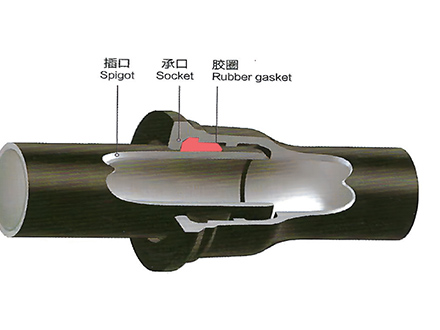 GT-type Joint Ductile Iron Pipe
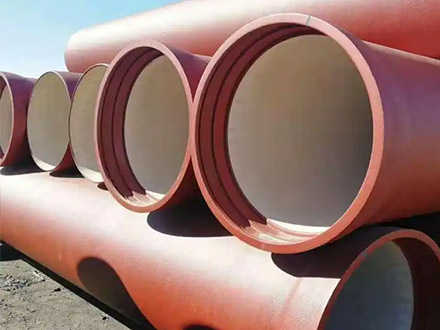
 Sewage Pipe (Ductile Iron Sewage Pipe)
 Special Coating Pipe (Ductile Iron Pipe with Special Coatings)