

150mm Ductile Iron Pipe Price: What Determines Cost & How to Get an Accurate Quote
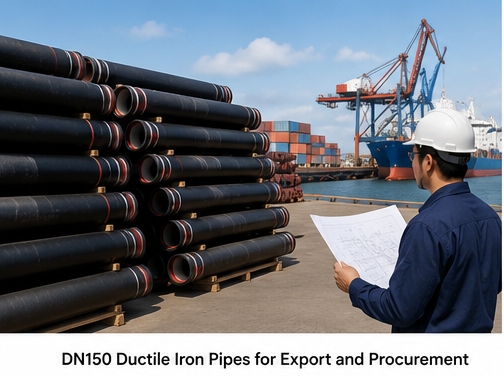
There is no single "150mm ductile iron pipe price" — quotes for the same nominal size can differ by 3–5x depending on pressure class (K7/K9/K12), lining and coating, joint type, and whether the price quoted is ex-works, FOB, or CIF. As a starting reference, standard K9 DN150 pipe (the most commonly specified class for municipal water) typically trades in the US$400–550 per ton range on a China FOB/ex-works basis for bare pipe, which works out to roughly US$10–14 per meter before lining, coating, and packing are added — finished, export-ready pipe usually runs higher once those are included. The sections below explain exactly why the number you see online rarely matches the number you'll actually be quoted, and what to check before comparing prices across suppliers.
If you've searched for "150mm ductile iron pipe price" and found numbers ranging from $50/meter to $500/ton to $60/foot on different sites, you're not imagining things — those figures genuinely aren't comparable to each other. Some are per-ton raw material prices, some are per-meter finished prices, some are US distributor prices with margin built in, and at least a few are simply unreliable. This guide breaks down what actually drives DN150 pipe pricing so you can read any quote — including ours — and know exactly what you're comparing.
1. Why "150mm Price" Doesn't Have One Answer
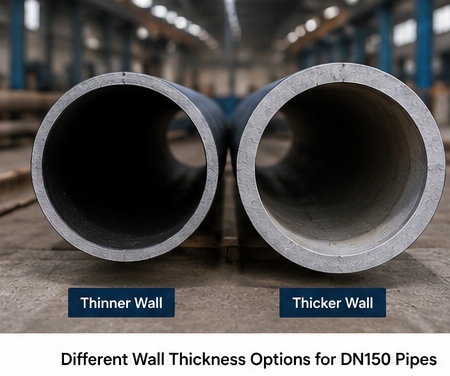
Four variables change the price of a DN150 (150mm / 6") pipe more than diameter alone:
Pressure class (K7 / K9 / K12). Wall thickness — and therefore the amount of iron used — increases with class. DN150 K9 has a 6.0 mm wall; a higher class uses more material and costs more per meter, even though the outside diameter is unchanged.
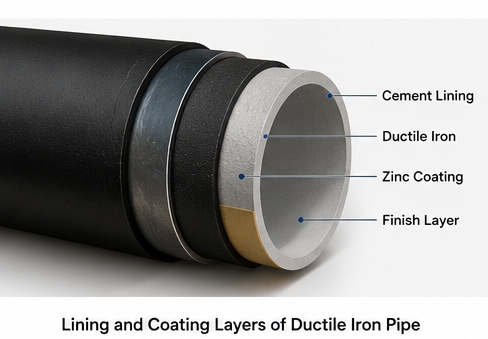
Lining and coating. Bare (uncoated, unlined) pipe is the cheapest baseline. Cement mortar lining, zinc + bitumen external coating, or epoxy lining for corrosive service each add material and processing cost. Most municipal specifications require at least cement lining and zinc coating as standard — genuinely bare pipe is rarely what actually gets shipped.
Joint type. Push-on (T-type/Tyton) is the standard, lowest-cost joint. Mechanical (K-type), flanged, or self-restrained joints require additional machining and hardware, raising unit cost.
Pricing basis (ex-works / FOB / CIF). This is the one buyers most often overlook — see Section 4 below. The same physical pipe can be quoted at three very different numbers depending on what's included.
Key Point: When comparing two "150mm price" quotes, first confirm they specify the same class, lining/coating, joint type, and Incoterm. If any of those four aren't stated, the number isn't a real comparison point yet.
2. How the Price Is Actually Calculated
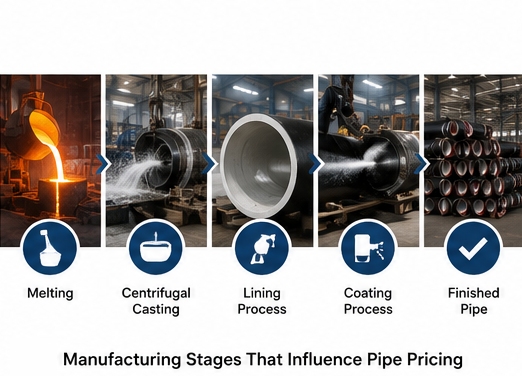
Ductile iron pipe is fundamentally sold by weight — mills and factories price in US$ per ton, then convert to a per-meter or per-piece figure based on the pipe's actual mass. Understanding this lets you sanity-check any quote you receive.
For DN150 K9 pipe: outside diameter 170 mm, wall thickness 6.0 mm, giving a unit weight of roughly 24 kg per meter (bare, unlined). At a typical China FOB/ex-works range of US$400–550 per ton for standard small-to-mid diameter K9 pipe:
24 kg/m ÷ 1,000 kg/ton × US$400–550/ton = approximately US$9.60–13.20 per meter for bare pipe material.
From that bare-pipe baseline, cost is added in layers:
| Cost Layer | Typical Effect on DN150 Pipe Price |
| Bare K9 pipe (material only) | Baseline — see calculation above |
| + Cement mortar lining | Adds material + centrifugal lining process cost |
| + Zinc spray + bitumen/epoxy external coating | Adds corrosion protection processing cost |
| + Testing, certification, export packing | Required for most international shipments |
| + Supplier margin | Varies by order volume and business relationship |
By the time bare material reaches a finished, tested, export-packed FOB quote, DN150 K9 pipe commonly lands somewhere in the US$15–25 per meter range on a China FOB basis — though this should be treated as an indicative planning figure, not a quote. Raw material (pig iron and scrap) prices move with global metals markets, so actual figures shift over time; always confirm current pricing for your order.
3. Indicative Price Range by Class and Coating (DN150)
| Specification | Indicative FOB China range (per meter) | Notes |
| K7, bare/basic coating | Lowest cost tier | Common for low-pressure or non-potable applications where local code permits |
| K9, cement-lined + zinc/bitumen coated | Most commonly quoted | Standard specification for municipal water distribution |
| K9, epoxy-lined | Mid-to-upper tier | Used where cement lining is unsuitable (aggressive water chemistry) |
| K12, cement-lined + coated | Highest of the common tiers | Deeper burial, higher surge pressure, or heavier traffic loading |
These ranges are directional and intended for early-stage budgeting. Actual pricing depends on current raw material markets, order volume, and specification details — request a formal quote for project-specific numbers.
4. FOB vs. CIF: Why the Quote You Receive Won't Match the Number You Saw Online
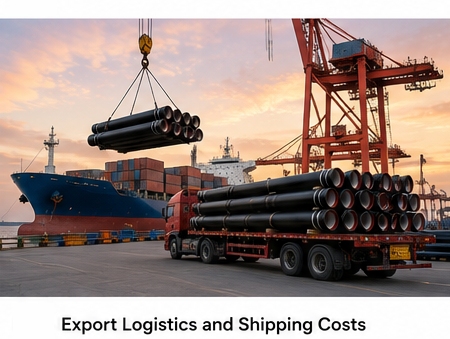
This is the single biggest source of price confusion for overseas buyers, and it's rarely explained clearly:
Ex-works (EXW) — the price at the factory gate. Doesn't include loading, export customs, or any freight.
FOB (Free on Board) — the price once goods are loaded onto the vessel at the origin port. Includes inland trucking and export customs from most Chinese suppliers, but not ocean freight or destination costs.
CIF (Cost, Insurance, Freight) — the price landed at your destination port, including ocean freight and marine insurance. This is the number closest to what you'll actually pay before local customs duties and inland delivery.
For a heavy product like ductile iron pipe, freight is not a minor line item — it can represent a meaningful share of landed cost, especially for smaller orders that don't fill a full container. A DN150 pipe order that looks inexpensive on an FOB basis can shift substantially once ocean freight to a smaller or less-served port is factored in. Whenever you're comparing supplier quotes, confirm which Incoterm each number reflects — an FOB quote from one supplier and a CIF quote from another are not comparable without adjustment.
Key Point: Always ask for both FOB (your responsibility for freight) and CIF (supplier arranges freight to your port) quotes when evaluating suppliers, so you can compare landed cost apples-to-apples regardless of which basis each supplier defaults to.
5. How Order Volume Changes Unit Price
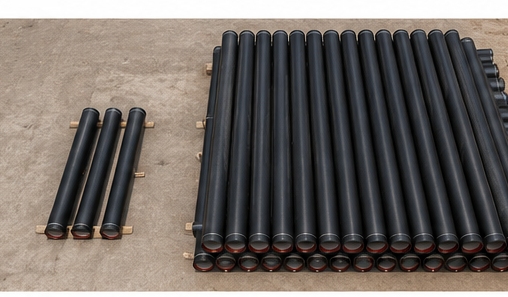
Single-size, small-volume orders typically carry the highest per-meter cost, since fixed costs (mold setup, testing, documentation) are spread over less tonnage.
Full-container, single-size orders get better per-meter pricing but require enough DN150 demand to fill a container efficiently.
Mixed-size consolidated orders — combining DN150 with other sizes your project or customer base needs — are often the most practical way for distributors and smaller buyers to reach efficient container loads without overordering any single size. This is where working with a supplier that coordinates across multiple factories is a genuine cost advantage, rather than being limited to whatever one factory's minimum order quantity requires.
6. Frequently Asked Questions

Why do 150mm ductile iron pipe prices vary so much online?Because listed prices mix different units (per ton vs. per meter vs. per piece), different pricing bases (ex-works vs. FOB vs. CIF), and different specifications (class, lining, coating) without always stating which. A $50/meter figure and a $500/ton figure could both be describing similar pipe — or completely different specifications. Always confirm the basis before comparing.
Is 150mm the same as DN150 or 6-inch?150mm and DN150 refer to the same nominal size under the metric ISO 2531/EN 545 system. A 6-inch pipe under the US AWWA C151 (inch-based) standard is close in nominal size but not dimensionally identical — the actual outside diameter differs between the two standards, so they shouldn't be treated as interchangeable without checking OD and joint compatibility.
What's included in an ex-works price versus a FOB price?Ex-works covers only the pipe at the factory gate. FOB additionally covers inland transport to the port and export customs clearance, with the goods loaded onto the vessel. Neither includes ocean freight — that's added on top for FOB, or already included if you're quoted CIF.
Does a higher price always mean better quality?Not necessarily — but an unusually low price relative to the ranges above is worth questioning. It often means a lower pressure class, missing lining/coating, non-standard wall thickness, or a quote that excludes packing, testing, or certification that you'll need for customs clearance or project acceptance. Always confirm the full specification behind any quoted price.
How can I get an accurate price for my specific project?Provide your required pressure class, lining/coating, joint type, quantity, and destination port. Ductile iron pricing moves with raw material markets, so a project-specific, current quote will always be more accurate than any published reference range — including the ones in this article.
Ready for a real number instead of a range?
📐 Engineers & project buyers: Send us your DN150 spec (class, lining, coating, joint type, and quantity) and we'll return an FOB and CIF quote against current market pricing. Request a quote →
📦 Distributors & trading companies: Combining DN150 with other sizes for a fuller container? We source across multiple qualified factories to consolidate mixed-size orders at competitive
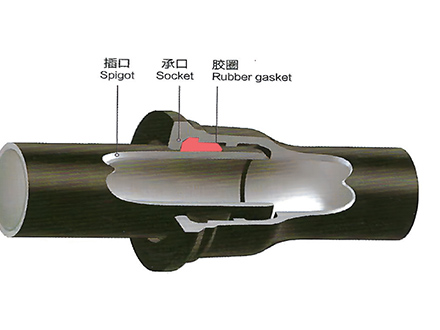 GT-type Joint Ductile Iron Pipe
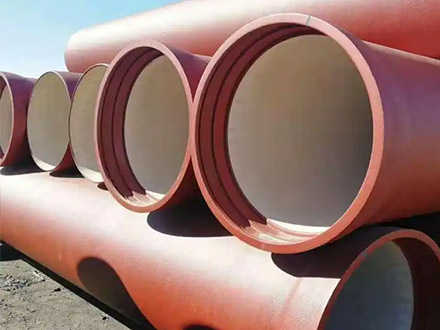
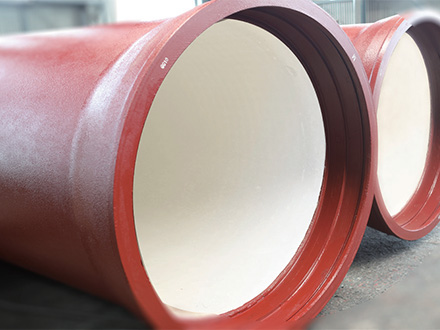 Sewage Pipe (Ductile Iron Sewage Pipe)
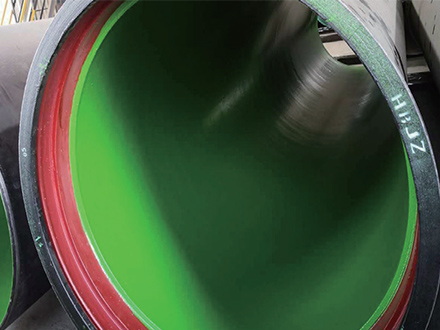 Special Coating Pipe (Ductile Iron Pipe with Special Coatings)